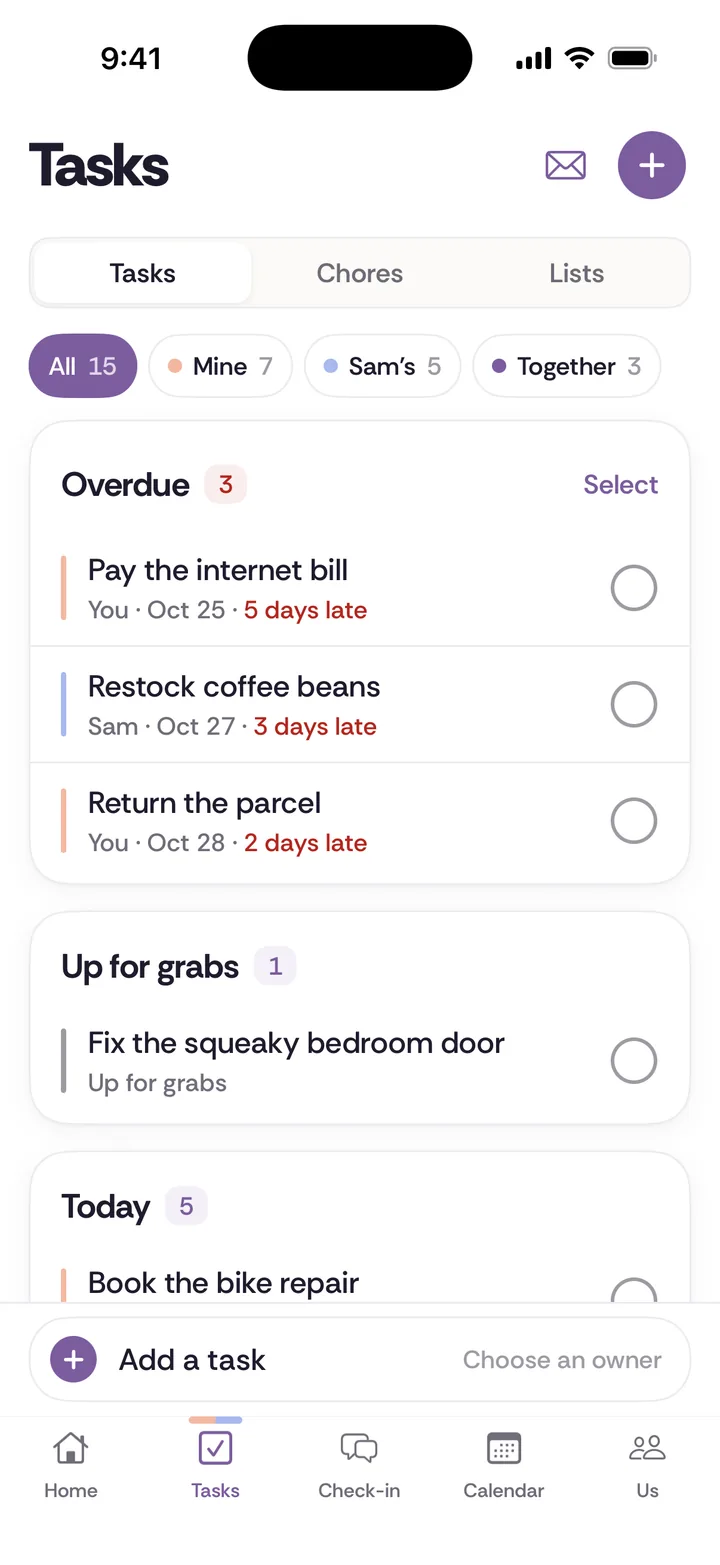
An adult chore chart should not look like a parent assigning gold stars. It should record an agreement between equals: what work exists, who owns each area, what finished means, and when the arrangement will be reviewed. The format can be paper, a shared note, a spreadsheet, or an app. The quality of the agreement matters more than the surface.
Start small. A chart with every possible household task can become another project for one person to maintain. Choose the responsibilities that repeat, create reminders, or regularly become urgent. Build the first version for one week, then change it based on what actually happened.
Use responsibilities, not a giant task dump
Group related steps into whole jobs. Instead of listing wash, dry, fold, and put away as four independent chores, use laundry and define the finish line. Instead of listing five meal actions, use weekday dinners and name what ownership includes. This keeps the chart readable and transfers the thinking with the visible work.
Use one-off tasks for exceptions such as booking a repair or buying storage boxes. Recurring responsibilities need a durable owner. Mixing everything into one flat checklist makes ongoing ownership disappear beneath today's errands.
Create columns that answer real questions
A practical adult chart needs a responsibility, owner, finish line, rhythm, and next review. Add notes only when they prevent a predictable question. You do not need points, rewards, or a complicated color system. The chart should let either partner understand the agreement in less than a minute.
If ownership rotates, state the rule clearly: alternate weekly, switch after completion, or assign specific days. 'We take turns' is not a system if nobody knows whose turn comes next. Record the current owner where both people will see it.
Define done without micromanaging
Write the outcome both partners expect. 'Kitchen reset before bed: dishes loaded, counters clear, sink empty' is more useful than 'clean kitchen.' Keep the standard focused on shared impact, safety, or timing. Do not prescribe a preferred technique when several methods produce the agreed result.
Discuss standards before assigning the job. If one partner wants a much higher standard, decide whether the household adopts it, the person who values it owns the extra work, or you find a compromise. Silent expectations create repeated failure even when someone is trying.
Choose owners with capacity and preference in mind
An equal number of rows is not necessarily fair. Estimate the time, frequency, unpredictability, and planning demand of each responsibility. Consider paid work, caregiving, health, commuting, and the jobs each person strongly prefers or dislikes. Aim for a workable total, not visual symmetry.
Avoid assigning by gender or assuming that skill creates permanent ownership. Skill can be taught, and preferences can change. If one partner currently knows a job, plan a complete handoff rather than making that expertise a lifetime sentence.
Add a handoff rule before you need one
Life will disrupt the chart. Agree how to request a temporary swap and how the other person accepts or declines. A request is not an automatic reassignment. If neither person has capacity, lower the standard, postpone the job, pay for help when possible, or decide what can be dropped.
Tiptoe chores keep one owner and a shared done-means standard. A proposed handoff has an explicit response, while recurring and one-off tasks appear in the same week. That structure is useful when a paper chart becomes hard to update away from home.
Review the chart without grading each other
After the first week, ask which jobs still required reminders, which standards were unclear, and whether the total demand felt realistic. Change the system rather than assigning character flaws. A chart is a draft of how the household works, not a contract that proves who failed.
Keep a regular five-minute review until the arrangement becomes stable, then return when circumstances change. Tiptoe's weekly check-in can hold the review beside the coming calendar, appreciations, and other shared topics. The goal is less management in the background, not more household administration.
Questions couples ask
What should an adult chore chart include?
Include each whole responsibility, one owner, a clear finish line, its rhythm, and a review date. Add a handoff rule for weeks when capacity changes.
Should couples rotate chores?
Rotate when it improves fairness, skill sharing, or variety. Keep stable ownership when consistency is more useful, then review it rather than letting it become permanent by default.
Is a paper chart enough?
Yes, if both partners can find it, update it, and use it. An app helps when work repeats, changes hands, needs reminders, or must be available away from home.