Good couples communication is not a permanent state where nobody gets frustrated. It is a set of small, repeatable choices: choosing a workable time, describing one specific moment, making room for both versions, and deciding whether the conversation needs listening, a decision, or a next step.

How can couples communicate better about everyday problems?
Start with one concrete topic and a clear purpose. Describe what happened without assigning a motive, ask for the other person's view, and make a specific request. If the moment is too heated or crowded, agree when you will return rather than forcing a useful conversation out of a bad time.
Choose the job of the conversation
Before you begin, say what would make the conversation useful. You may want to be heard, understand what happened, decide between options, make a request, or agree on an action. Those are different jobs. Naming one prevents a listening conversation from turning into rapid-fire advice, or a practical decision from expanding into a review of the entire relationship.
Keep the subject small enough to hold. 'Can we decide who confirms Saturday?' gives both people something they can answer. 'We never communicate' asks one conversation to explain every earlier conversation at once. A narrow start does not make the issue unimportant. It gives you a better chance of learning something true about it.
Describe the moment without writing the motive
Use an example the other person can recognize: what happened, when, and how it affected the shared plan or your experience. Separate that observation from the story you told yourself about why it happened. 'The appointment changed and I learned after I arrived' leaves more room than 'you did not care whether I wasted my time.'
Your interpretation still matters. Present it as something to check: 'I started to think my time did not matter; is that what was happening?' The answer may not resolve the impact, but it can stop an assumed motive from becoming the only fact in the room. Listen for information you did not have when the event occurred.
Make a request that can receive an answer
A useful request is specific enough to accept, decline, or revise. Ask for a calendar update when a confirmed appointment changes, a ten-minute warning before visitors arrive, or a new owner for one recurring responsibility. 'Be more thoughtful' may express a real need but leaves the next behavior hidden.
Leave room for no, not now, or a different proposal. A request becomes an order when only one answer is safe. If the topic affects both people, keep working toward an agreement neither person has to pretend they chose. Record the practical part so goodwill does not have to remember every detail later.
Pause with a return plan
A pause can protect a conversation when either person is too activated, tired, rushed, or distracted to continue well. State that you intend to return, choose a realistic time, and handle any immediate safety or scheduling need. Walking away without a return plan can feel like disappearance; demanding an answer immediately can make useful listening impossible.
Use the break to settle, gather a missing fact, or work out what you are asking. Do not use it to assemble a prosecution. When you return, restart with the topic and purpose you agreed, not a list of everything either person did during the pause.
Keep repair concrete
Repair may be an apology, a corrected plan, a clear boundary, or a small action that prevents the same confusion next time. A complete apology names the impact without making the hurt person argue for it, while a useful plan says what changes. Words and actions support each other; neither needs a grand performance.
Some topics will not resolve in one sitting. Save what you understood, what remains open, and when you will return. Tiptoe can hold the next action and a check-in topic, but it cannot make a partner listen, guarantee repair, or substitute for professional support. If a shared conversation feels unsafe, use private support instead.
Make one small conversation easier
- Name one recent example instead of a permanent character claim.
- Say whether you want listening, ideas, a decision, or an action.
- Let each person explain what they understood before proposing a fix.
- Record one agreed next step or a real time to return.
One useful rule
Make the next step clear enough that either person can explain it.
Keep the system kind and current
A planning tool can hold an agreement, but it cannot make the first agreement fair or permanent. Both partners need a real say, a way to raise a problem, and permission to change the plan when work, health, or capacity changes.
Questions couples ask
- How do I bring up a problem without starting a fight?
- Choose a workable time, describe one specific moment, say what you need from the conversation, and make a request that can receive an honest answer.
- Is taking a break during conflict avoidance?
- Not when you name the pause, handle anything urgent, and agree on a realistic return time. A planned pause can make room for a safer, clearer conversation.
- Can an app improve communication?
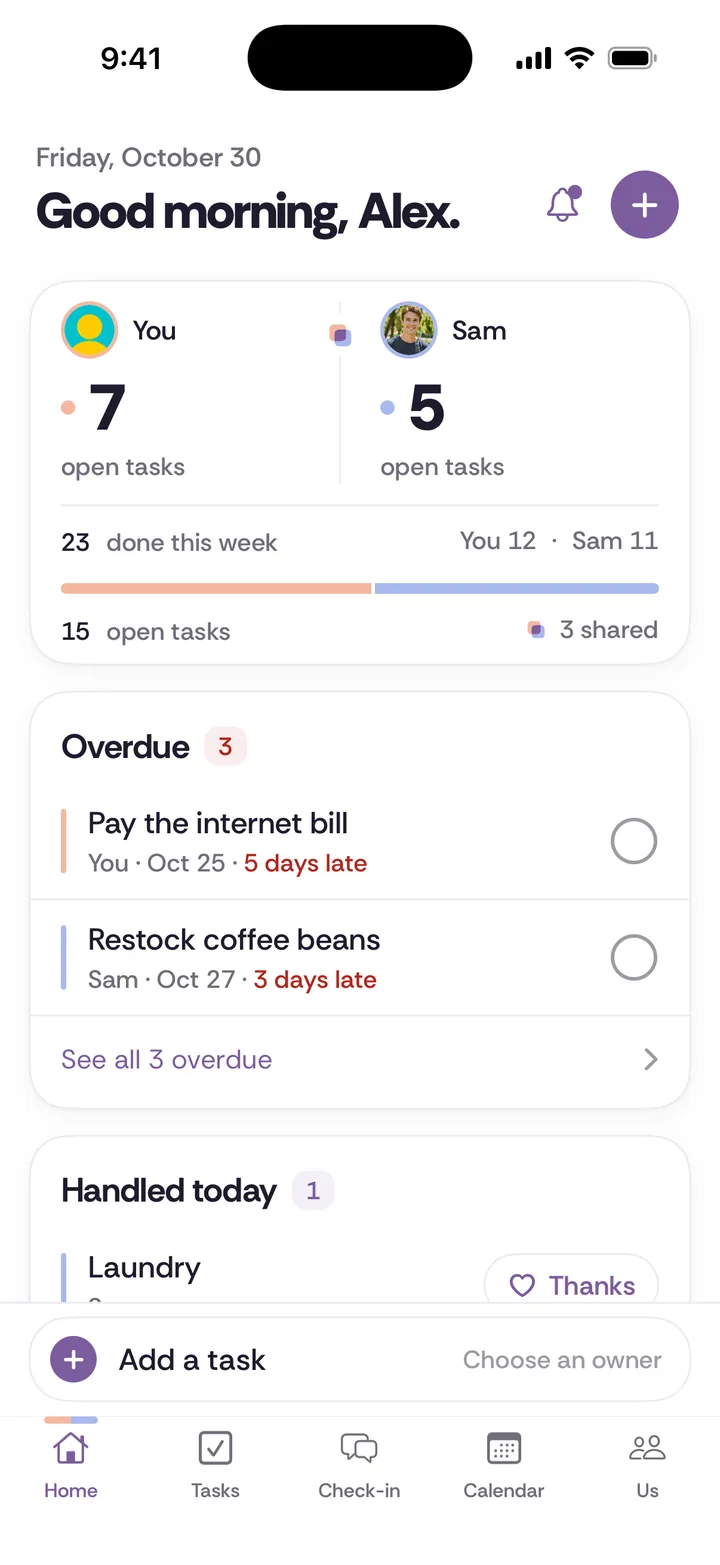
- An app can hold topics, timing, and agreed next steps. It cannot create consent, safety, listening, or repair for either person.