The wet towel has returned to the bed. You could say nothing, again. You could also deliver a speech that begins with the towel and ends with a comprehensive review of every journey it has ever taken through your home. There is a smaller option: say what happened, why it matters, and what you would like to do differently.
This is about ordinary friction between partners who can talk safely. A better opening line does not solve threats or controlling behavior. If you feel afraid to disagree, use the Safety resources rather than treating the problem as a wording exercise. For the everyday towel situation, give the conversation a clear subject and a time when someone can actually hear it.

Work out what you are asking for
Before starting, separate the event from the story you are telling yourself about it. The event might be a wet towel left on the bed. The story might be that your partner thinks your time does not matter. The event gives you something concrete to discuss. The story may be worth exploring, but presenting it as a proven motive makes it harder to begin.
Ask yourself what change would help. Do you want the towel hung up, a different laundry arrangement, or agreement that the bedroom stays clear? Those are different requests. If you cannot tell which one you mean, write a rough note privately first. You do not have to send your first draft. A first draft is allowed to have more exclamation marks than the finished conversation and substantially fewer ideas worth repeating aloud.
Choose a moment, not an ambush
Ask whether now works for a short conversation. If it does not, agree when you will return to it. ‘Can we talk after dinner about where the towels go?’ is clearer than ‘we need to talk later.’ The subject helps your partner understand the size of the invitation, and the time helps you trust that postponing is not the same as dropping it.
Avoid making the opening request when either of you is walking out, half asleep, or trying to complete something urgent. There will rarely be a perfect moment, but some moments have a much better chance. If small topics keep getting postponed, a weekly check-in can provide a regular place. Do not use that appointment as a reason to stay silent about something that needs a timely answer. A Sunday agenda cannot change the fact that tonight's guests are arriving tonight.
Say the specific thing in your own voice
A useful shape is: ‘When this happens, this is the effect. Could we try this instead?’ For example: ‘When wet towels go on the bed, I end up changing the cover. Could we hang them on the bathroom hooks?’ You are describing a job and asking for a change. You are not delivering a verdict on whether your partner is a considerate human being.
Keep the language natural. You do not have to sound as though you are reading from a laminated conversation card. ‘I keep running out of clean work shirts. Can we pick a laundry day?’ is fine. Avoid always and never unless the factual detail genuinely needs them. A partner who can remember one exception may otherwise spend the whole conversation discussing that exception. One recent example is usually enough to make the practical problem clear without inviting an audit of the last six months.
Leave room for information you do not have
After the request, stop talking long enough for your partner to answer. There may be something useful you do not know: the hooks are loose, your clothes are mixed with items needing a different wash, or your partner thought you preferred to handle a certain job. Listening does not mean giving up your request. It helps you choose a solution that addresses the real obstacle.
If the answer raises a different complaint, acknowledge it and agree whether it needs its own conversation. Try not to trade examples until nobody remembers the original request. For recurring household jobs, the issue may be unclear ownership rather than a bad habit. Read how to split chores fairly together when you have more time. You may need to define a whole responsibility instead of asking for the same small action every few days.
Choose a small experiment you can recognize
Turn the discussion into something observable. ‘Be more thoughtful’ is hard to try for a week. ‘Put used towels on these hooks and move dry ones to the hamper on Saturday’ is much clearer. Make sure the plan works for both people, including any equipment or time it needs. If the hooks do not hold the towels, assigning better intentions will not repair them.
Decide when to review the experiment. Ask whether it made the practical problem smaller and whether either person needs an adjustment. This is not a trap designed to prove someone failed. If the arrangement keeps returning the planning to one partner, look at sharing mental load. A job can be visibly completed while the responsibility for noticing and explaining it still sits in the same person's head. That pattern needs a different agreement, not a more elegant reminder.
Keep a draft from becoming a secret prosecution
Writing things down can help you return to a topic calmly. Keep the note focused on the issue and the request. Do not build a growing archive of every irritating moment to unveil at once. If the topic changes while you think about it, edit the draft. It should help you remember what matters now, not preserve your angriest interpretation for historical accuracy.
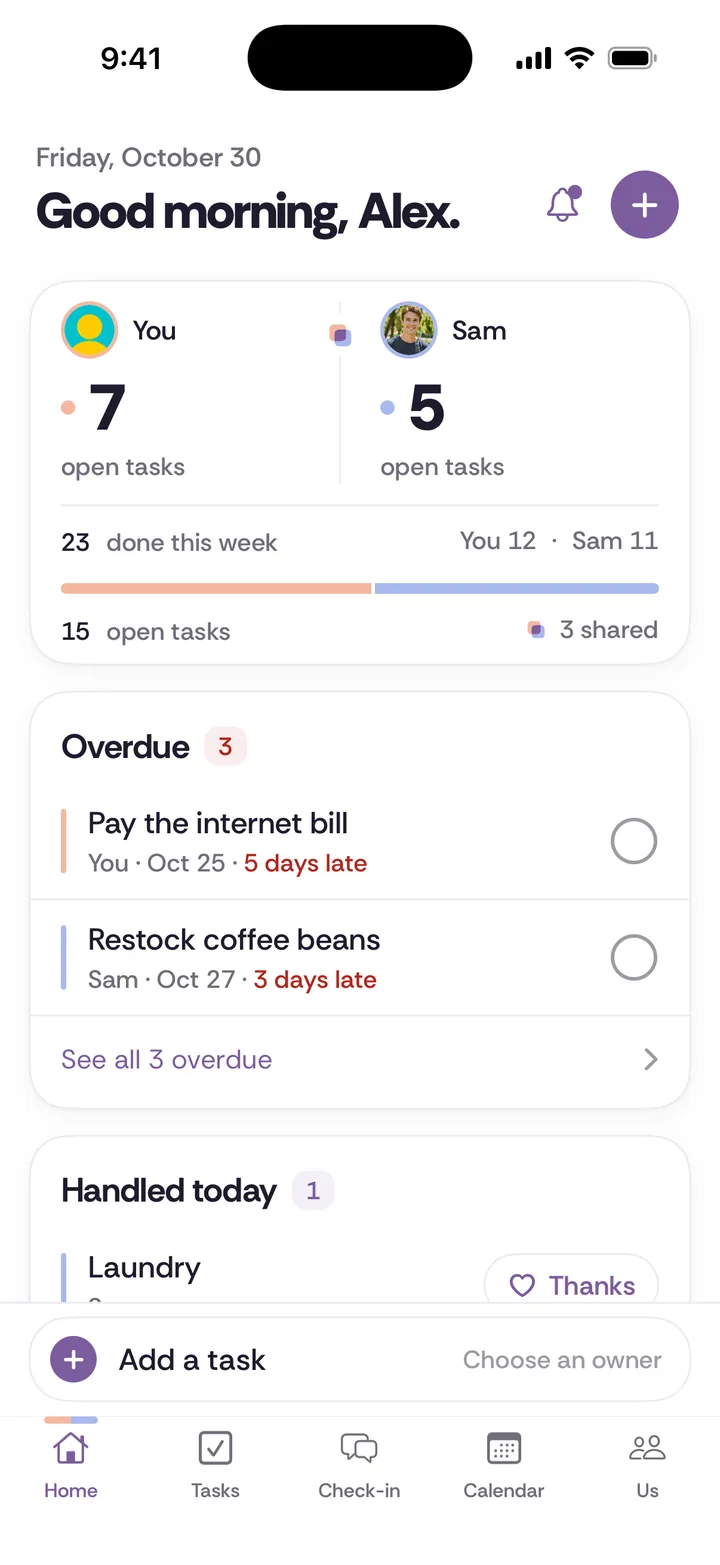
Tiptoe gives you private topic drafts, so you can find your words before anything is shared. Queue a topic only when you are ready for it to be shared. The aim is a conversation that sounds like you and leads to a workable next step. You still get to be direct. Being kind does not require pretending the bed was dry.
If the moment is not right, add the topic to your weekly check-in in Tiptoe and talk it through at the time you already chose. Write it the way you would say it out loud. A short line is enough; it is a starting point, not a verdict, and it should never decide what your partner meant.