You ask your partner to buy washing powder, and they do. The errand is finished. But you noticed the last box was nearly empty, checked which kind to get, remembered to ask, and watched the cupboard until the new one arrived. That surrounding work is what people often mean by mental load: the noticing, remembering, deciding, and following up that keeps everyday life moving.
This guide uses the term for practical household planning, not as a diagnosis or a measurement of your relationship. Both partners may carry work the other does not see. The useful question is where that work lives and how you want to share it. The washing powder is an excellent place to start, despite its limited conversational range.

Find the work around the visible work
Pick one household area and follow it from the first sign of a need to the point where it is handled. Groceries might begin with noticing that there is no food for Thursday, then checking ingredients, choosing meals, making a list, shopping, and putting things away. The visible trip to the shop is only one part. Social plans might include replying, choosing a date, arranging travel, and remembering what you offered to bring.
Each partner should name an area they handle and describe the steps. Ask questions with the aim of learning, not finding a step that sounds easy enough to dismiss. You may discover duplicated work too, such as both checking the same supplies because neither knows who has the job. Getting the work out in the open can help you remove unnecessary steps as well as share the necessary ones.
Notice the difference between helping and owning
Helping can be useful and welcome. The problem is when help is the only arrangement available: one person must notice every need and ask the other to act. That leaves the original person in charge of remembering the job. A partner can complete plenty of errands while still waiting for someone else to make every decision.
Ownership gives someone the whole responsibility within agreed boundaries. If you own groceries this week, you check what is missing, keep the list current, and arrange the shop. Your partner can still add something they want. They simply do not have to supervise the ordinary process. Use the chore-splitting guide to define those boundaries and agree what done means. Owning something does not mean you can never ask for help. It means you are responsible for arranging that help clearly rather than assuming another person is quietly monitoring the result.
Move information, access, and decisions together
A handoff needs more than a name on a list. If your partner is taking over a household responsibility, share the practical information they need: which supplies you use, where they are stored, and any constraints you both care about. Make sure they have appropriate access to the service or information required. Use normal secure account practices; a household plan is not a reason to paste passwords into a shared note.
Explain the important details once, then let the new owner decide ordinary things within the agreement. If every choice still needs approval, the responsibility has not moved very far. Agree which decisions need a conversation and which do not. A different brand of bin bag may be fine. A change that affects a partner's needs deserves discussion. Be specific about that distinction instead of saying ‘use your judgment’ and later revealing a private rulebook.
Put reminders outside one person's memory
A shared list can hold what is running low. A task can hold a next action and an owner. An agreed check-in can hold the recurring question of whether responsibilities still fit the week. The tools work best when both people know what belongs where and actually look there. Creating a new list every time something feels busy just gives one person more places to maintain.
Choose the smallest system that supports the responsibility. For groceries, one current list may be enough. For a recurring job with multiple steps, an ownership standard can help. Keep reminders attached to the job rather than relying on a partner to deliver them aloud. If you are the person who used to remember everything, notice when you are still checking secretly. Talk about what would let you stop. The answer may be clearer expectations, a reliable update, or a smaller first handoff.
Review capacity without counting affection
Work changes. A partner who owned several responsibilities last month may be traveling or dealing with a difficult week now. Make room to say that plainly. Review the split at a weekly check-in and agree any changes before the job becomes urgent. If both people are stretched, consider what can be simplified, delayed, or dropped instead of endlessly redistributing an impossible plan.
Avoid using the number of tasks as a measure of care. Jobs differ in timing, complexity, and how much attention they require. An arrangement can look equal and still feel unworkable to one person. Ask for examples and discuss them. Bringing up a small problem gives you a way to make a concrete request without claiming to know your partner's motives. The goal is a clearer division of work, not a final ruling on which person has been trying harder all along.
Start with a responsibility that keeps returning
Choose an area with a recognizable beginning and end. Write down the current steps, agree the standard, and decide who owns it for a first week. Share the needed details. At the end, ask whether the owner could handle it without being prompted and whether the other partner could stop checking. Those questions tell you more than simply asking whether the errand got done.
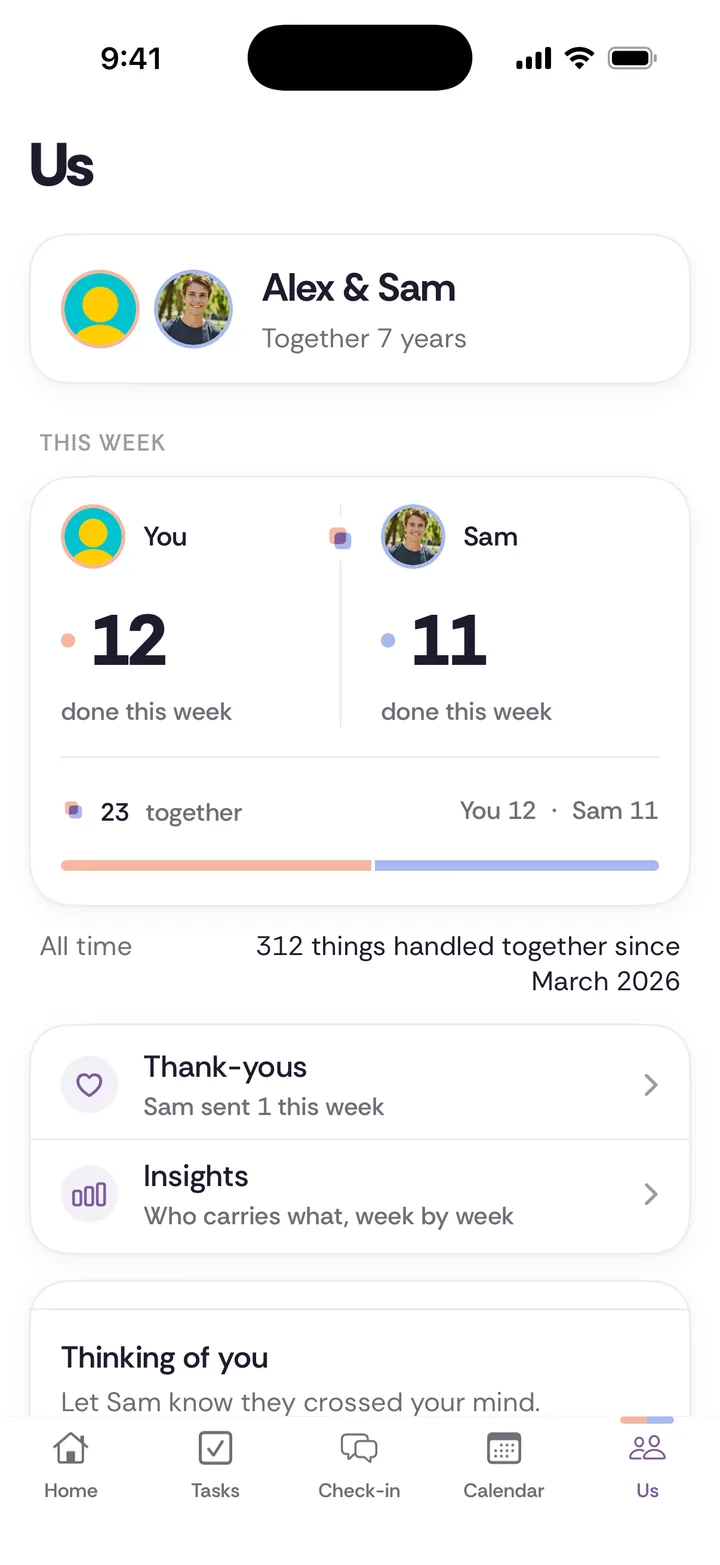
Tiptoe can make responsibilities, effort, and mental load visible through chores, but it cannot measure all the work in your life or decide what is fair. Use the written structure to support a real agreement, then adjust it as you learn. You do not need to hand over the entire household in one heroic Sunday. One job that no longer requires a manager is a useful beginning. The cupboard can contain washing powder without also containing an ongoing conversation about washing powder.