A weekly check-in sounds deeply unsexy until you consider the alternative: trying to decide the entire coming week while one person is brushing their teeth and the other is looking for a charger. A short, regular conversation gives ordinary decisions somewhere to happen. It also lets ‘can we talk?’ mean something less alarming than the opening line of a season finale.
Fifteen minutes is a useful container for a small week, not a deadline for resolving everything between you. Bring a drink, put the phones where they will not keep interrupting, and agree that you can stop and arrange another time if the conversation needs more room. Sunday is an option. Your Tuesday morning counts too.

Pick a time that has a chance
Choose a slot when neither person is rushing out or trying to go to sleep. Be honest about the obstacles. If Sunday evenings always involve travel, use another day. If one partner works shifts, choose the next check-in before ending the current one. A recurring ritual is only useful if it fits the people doing it.
Before you begin, each person can note one appreciation, one practical concern, and one thing they want next week. These are prompts, not homework to grade. Do not use the preparation time to collect every unfinished task since moving in. If you arrive with different priorities, agree to give both a hearing and choose one topic to work on today. Keep anything bigger somewhere you can return to it. A predictable place is better than an ambush at the kitchen door.
Minutes one to three: notice something good
Start with a specific appreciation. ‘Thanks for sorting the delivery when I was in meetings’ says more than a broad declaration that your partner is wonderful. Notice work that was easy to miss: planning, making calls, remembering a detail, or clearing a space so you could rest. Give your partner time to receive it without immediately adding a request.
Then ask how the week felt. You might each name something that felt easy and something that felt heavy. Different answers are information, not proof that someone experienced the week incorrectly. One partner can have enjoyed a busy weekend while the other needs the next one quieter. You do not have to settle that difference before looking ahead. You just need to hear it without treating the conversation as a contest over whose calendar looked more impressive.
Minutes four to seven: look at the practical week
Name the dates, late work nights, visits, and responsibilities that could collide. Focus on the next seven days. Who needs the car, if you share one? Which evening needs a simple dinner? Is an occasion coming up that needs preparation? A gift-planning habit can prevent that last question from becoming a panicked shopping session later.
Check the responsibilities that need adjusting. Do not read every completed chore aloud. Ask where the current split needs help and agree any handoff clearly. If an ongoing job keeps causing friction, use the fuller approach in splitting chores fairly outside this short review. Today you only need the next workable arrangement. Write down who will do what and when. ‘We should deal with that’ is a thought; ‘I will call on Monday’ is a next step.
Minutes eight to twelve: choose one small topic
Pick something specific enough to discuss without opening the entire history of the relationship. ‘Can we agree when visitors need a heads-up?’ is easier to work on than ‘our families are a problem.’ Say what happened, explain the practical effect, and ask for a change you can try. Let your partner describe their side before deciding the answer.
A useful result can be an agreement, a task, or a decision to return to the topic with more time. You do not need a finished resolution to have made progress. Try bringing up something small if the first sentence is the hardest part. If you notice that the topic is much larger than expected, stop the timer's attempt to run your life. Choose a proper time to continue. A rushed yes is not necessarily an agreement either person can keep.
Minutes thirteen to fifteen: decide what happens next
Read back the decision in ordinary words. An example: ‘This week we ask before inviting anyone for dinner, and we will see how that feels next Sunday.’ Name the owner of any follow-up task. If you have decided to try a new split of a household responsibility, make sure both people understand its boundaries and what finished means.
Leave room for something you want to do together. Pick an idea and the next step that will make it happen. It can be small, cheap, and at home. Then end the check-in. Avoid reopening a second topic just as your partner stands up. That teaches both of you that a fifteen-minute invitation may actually contain an undisclosed second meeting. If something comes to mind afterward, write it down for next time unless it genuinely needs attention sooner.
Keep the habit flexible enough to keep
Some weeks you will need ten minutes; other weeks you will need twenty or a separate conversation. Missing one does not create a debt. Resume with the current week instead of attempting an exhaustive catch-up. If check-ins repeatedly run long, reduce the number of topics and move bigger decisions into their own time. If they feel like chores, make more room for noticing what went well.
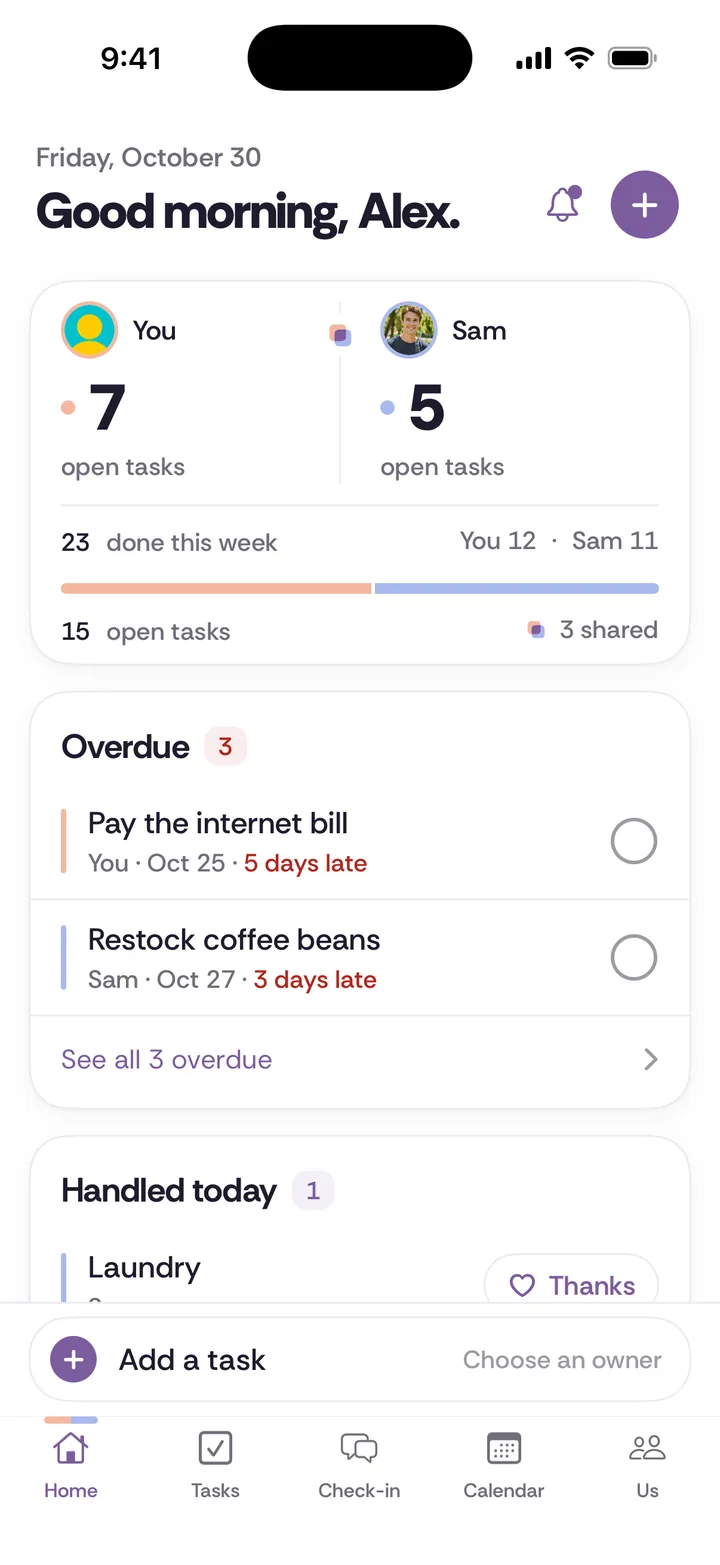
Tiptoe brings appreciations, the week ahead, and queued topics into a weekly check-in, but it is not therapy and cannot settle the conversation for you. Answers stay private until both partners submit and a shared reveal is created. If you feel afraid, threatened, or controlled, do not use a shared check-in to seek help; visit the Safety resources. For ordinary household friction, start small: one thanks, one practical adjustment, one next plan. Then go drink your coffee while it still resembles coffee.