Money can turn into a conversation about everything at once: security, fairness, family history, plans, and fear. A smaller job makes the discussion more usable. Choose one decision and agree what information you need before trying to solve it.

How do couples start a money conversation?
Name one decision, choose a time, and bring only the facts needed for that question. Each person should have room to say what the decision means to them. Finish by recording the next action, not by pretending every money topic is settled.
Start with visibility, not a perfect merger
Couples can share a household without combining every account. Begin by listing the bills and expenses that affect both partners, when they are due, and who currently pays them. Include annual renewals and irregular costs such as travel, repairs, gifts, and vet care. The goal is a usable picture, not a judgment about how either person handled money before.
Decide which numbers need to be shared for the decision in front of you. A bill plan may require income ranges, fixed obligations, and shared goals, but not unrestricted access to every transaction. Consent and clarity matter more than choosing the most merged arrangement.
Choose a split that fits your actual lives
Common approaches include equal amounts, percentages based on take-home income, assigning whole bills, or contributing to a shared account. Each can be reasonable. Compare the remaining personal money, unpaid household work, debt obligations, and income stability rather than looking only at the percentage on a spreadsheet.
Write the rule in plain language and test it for a month. For example: shared rent and utilities are proportional to take-home pay, groceries are tracked and settled weekly, and personal purchases stay personal. A written rule reduces the need to renegotiate every receipt.
Give every bill an owner and a backup
A bill needs more than a payer. Someone must notice the statement, check the amount, make sure funds are available, handle changes, and confirm payment. Name the owner and record the due date. For essential bills, agree what happens if the owner is sick, traveling, or locked out of an account.
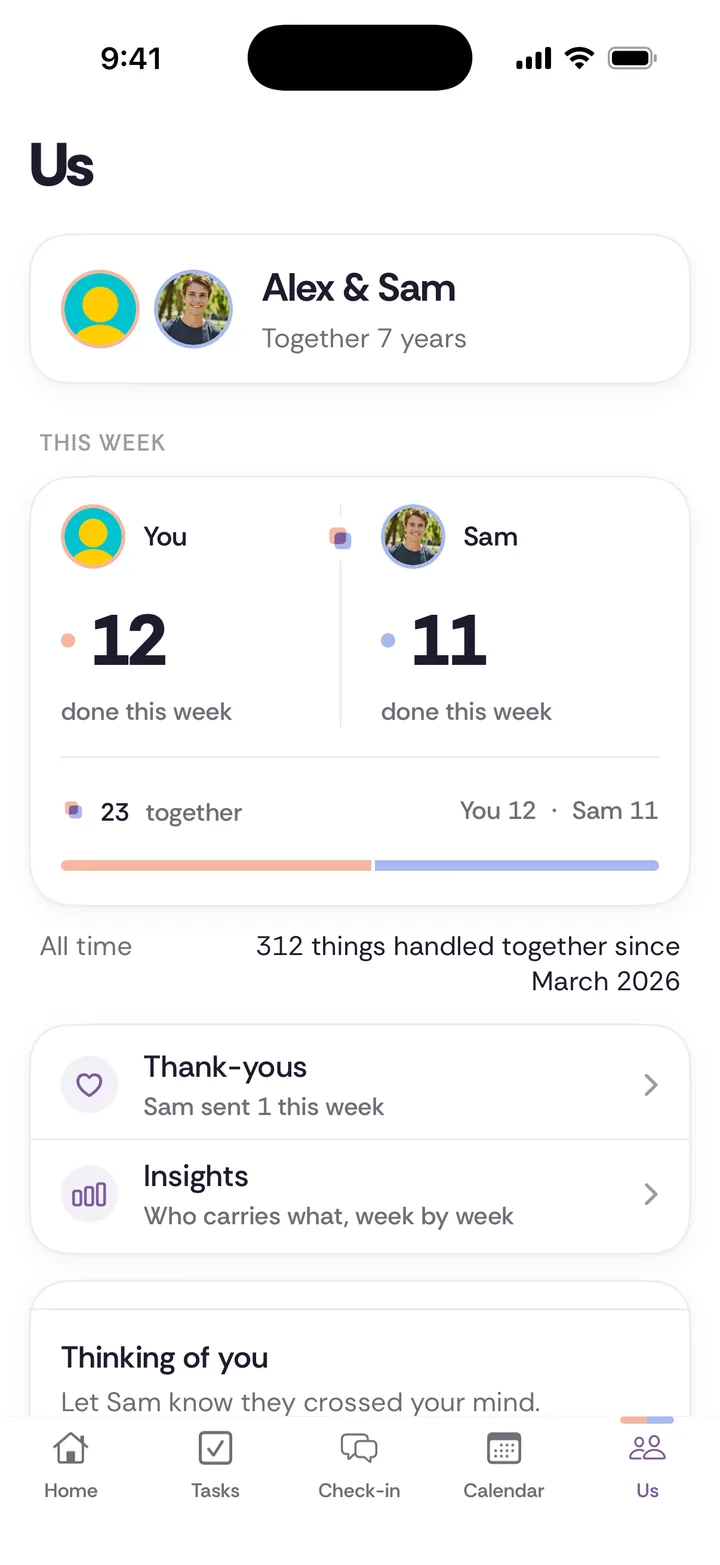
Use a Tiptoe topic to park a money conversation and tasks to name the next action. This version does not offer bill tracking, an expense ledger, balances, or payment tools. Keep financial records in a separate tool.
Keep reimbursements boring
Small shared purchases become stressful when nobody knows whether they count or when they will be settled. Agree on categories, a minimum amount if useful, and a regular settlement rhythm. Record the expense close to the purchase so neither person has to reconstruct a month from memory.
Do not use the balance as a moral score. It is an accounting aid. If one partner is paying more under an agreed arrangement, the number may be correct without needing immediate correction. The rule you agreed matters more than making the display reach zero every day.
Make goals concrete enough to fund
Name the goal, target amount, target date, and next contribution. Separate a shared wish from a committed plan. 'Japan in spring' becomes actionable when you agree on the rough budget, who researches flights, and what amount you can set aside this month.
Review goals alongside upcoming bills so optimism does not hide a cash-flow problem. It is fine to pause or resize a goal. A useful plan reflects current capacity and leaves room for personal spending without requiring either partner to justify every small choice.
Hold one money conversation at a time
Do not combine rent, retirement, debt, family expectations, and vacation spending into one late-night talk. Choose one decision and bring the facts needed for it. Let each partner explain what the decision means to them before proposing a fix. Money carries history and emotion even when the arithmetic is simple.
Finish with one next action, an owner, and a return date. Add larger topics to the weekly check-in during the week and talk through one when both people have capacity. The aim is a series of clear decisions, not a single conversation that permanently solves money.
Give the talk one job
- Write the single decision in one sentence.
- Separate known numbers from assumptions and worries.
- Let each partner explain what matters before proposing a fix.
- Agree one next action, its owner, and when you will return to it.
One useful rule
Make the next step clear enough that either person can explain it.
Keep the system kind and current
A planning tool can hold an agreement, but it cannot make the first agreement fair or permanent. Both partners need a real say, a way to raise a problem, and permission to change the plan when work, health, or capacity changes.
Questions couples ask
- What is a fair way to split bills as a couple?
- Equal shares, income-based percentages, assigned bills, and a shared account can all work. Compare capacity, unpaid work, stability, and the personal money each partner retains.
- Does Tiptoe connect to bank accounts?
- No. Tiptoe does not link banks or track bills and expenses. You can keep a discussion topic and follow-up tasks around a money decision.
- How often should couples settle shared expenses?
- Choose a predictable rhythm such as weekly or monthly. Recording purchases promptly and settling on schedule prevents a long backlog of tiny negotiations.