Moving in together turns separate routines into shared financial decisions. Rent and utilities are obvious. Groceries, furniture, subscriptions, repairs, travel, pets, and the cost of hosting people can be harder to classify. The best system is not universally equal or proportional. It is one both partners understand, can afford, and can revisit without reopening every purchase.
Before choosing accounts or apps, list the shared costs and discuss what each person wants to keep separate. Talk about income stability, debt payments, family obligations, savings goals, and unpaid household work at the level needed for the decision. Nobody needs to surrender all financial privacy to create a reliable bill plan.
Method 1: split shared costs equally
A 50/50 split is simple when incomes and fixed obligations are similar. Each partner contributes the same amount to rent, utilities, groceries, and other agreed categories. It is easy to explain and audit, and it avoids renegotiating percentages whenever a small expense changes.
Equal amounts can feel unequal when incomes differ substantially. Compare what each partner has left after shared costs and unavoidable personal obligations. If one person cannot save or cover basic personal needs under the split, simplicity is not enough reason to keep it.
Method 2: contribute by income percentage
An income-based split can preserve more similar breathing room. Divide each partner's take-home income by the combined amount, then use those percentages for agreed shared costs. Recalculate when income changes materially rather than adjusting every month for a small variation.
Agree which income number you use and which costs remain personal. A percentage formula does not answer whether debt, bonuses, family support, or unpaid work should affect the arrangement. Discuss those choices directly and write down the rule.
Method 3: assign whole bills
One partner can own rent while the other covers utilities, groceries, and insurance. This reduces reimbursements and gives each bill a clear owner. Add the totals periodically, because a set of smaller bills can change faster than one fixed payment and quietly become unbalanced.
Ownership should include checking statements, handling price changes, and confirming payment. For essential services, share enough information for a backup plan if the owner is unavailable. Do not make account access the only place the household knows a bill exists.
Choose separate, shared, or hybrid accounts
Separate accounts preserve independence but require a clear reimbursement or bill-assignment method. A shared household account can automate regular contributions and payments. A hybrid keeps personal accounts while both partners fund one shared account for agreed costs. Each structure can work when access, contribution timing, and exit expectations are clear.
Do not open joint credit or grant broad account access under pressure. Understand liability and bank terms first. This guide is practical planning information, not financial or legal advice. When debt, property ownership, immigration, taxes, or safety concerns affect the decision, get qualified individual advice.
Settle expenses on a predictable rhythm
Decide what counts as shared, who records purchases, and when balances are settled. Weekly works for frequent groceries and small purchases. Monthly may be enough when most bills are automated. Enter expenses close to the purchase, because reconstructing a month from memory invites frustration.
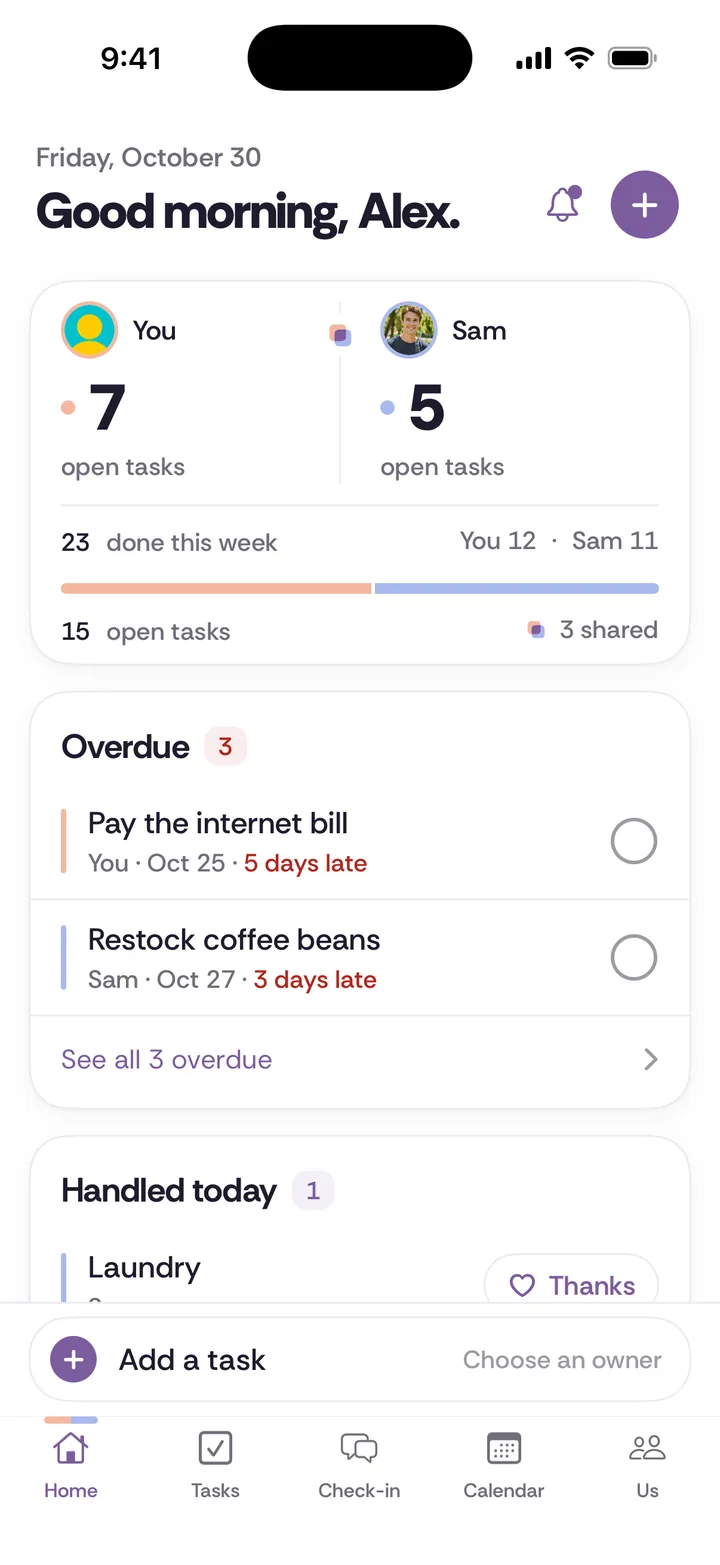
Tiptoe can hold your conversation topic, agreed next action, and weekly check-in. Use a separate tool for expense records and payments; this version does not track bills, balances, or savings goals.
Review the plan after the first month
Check whether both partners paid what they expected, retained reasonable personal money, and understood which purchases were shared. Look for administrative imbalance too. If one person records every receipt and notices every renewal, the payment split may be fair while the management split is not.
Change one rule at a time and set another review date. A bill plan should adapt when rent, income, health, caregiving, or household goals change. The aim is a stable system that makes money conversations smaller, not an arrangement nobody is allowed to question.
Questions couples ask
Should unmarried couples split rent 50/50?
They can, but it is not the only fair method. Compare income, fixed obligations, unpaid work, and what each person retains after shared costs.
Do we need a joint bank account?
No. Separate accounts, a shared household account, or a hybrid can all work. Choose clear contribution, access, and exit rules before moving money.
Can Tiptoe help with money conversations?
Yes. Add a topic, agree a next action, and return to it at your weekly check-in. Financial records and payments stay in a separate tool.