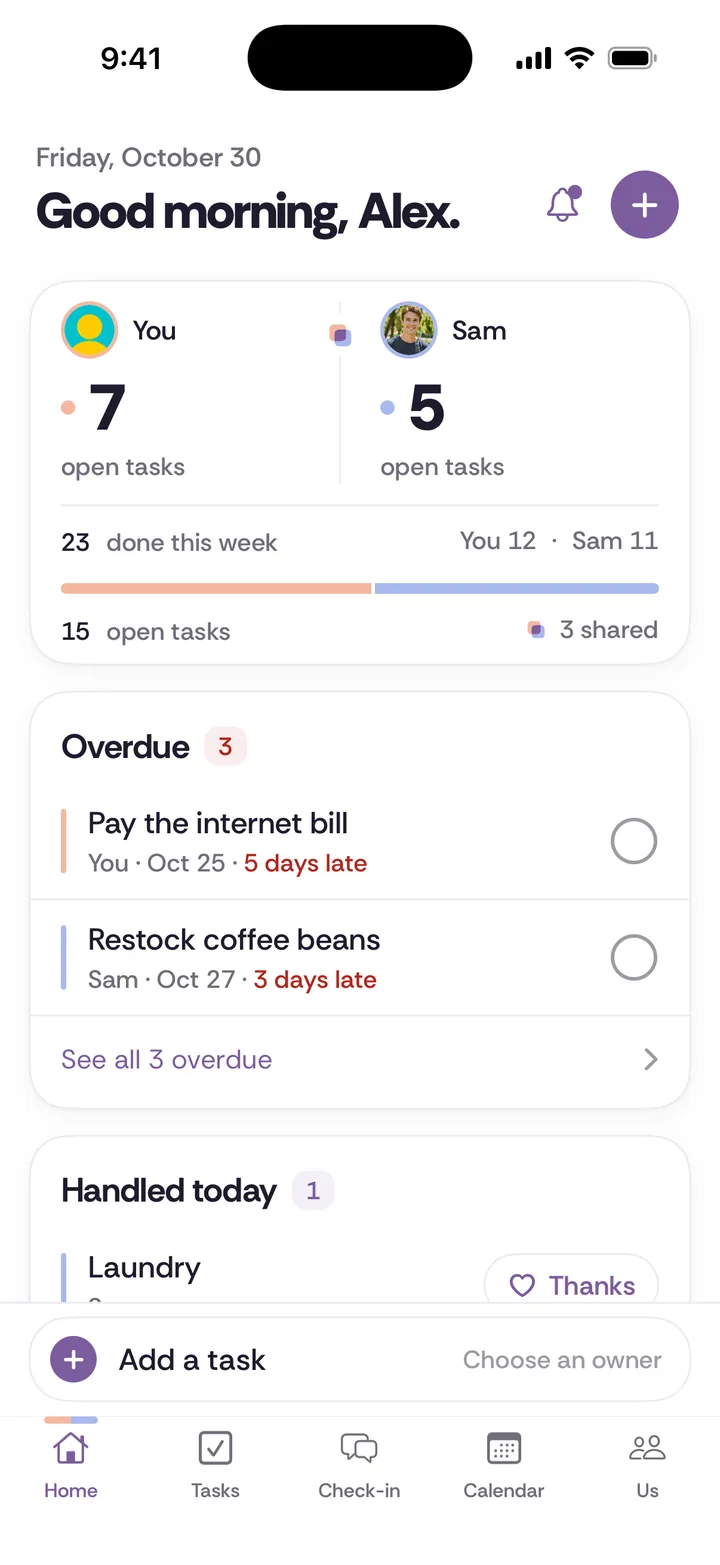
Moving in together is two projects at once. There is the move itself: lease, utilities, keys, boxes, address changes, and furniture. Then there is the operating agreement for ordinary life: money, chores, food, guests, privacy, sleep, pets, and how you raise a small problem before it becomes a large one. The second project is easier to postpone and harder to improvise.
Use this checklist as a conversation map, not a compatibility test. You do not need identical preferences. You need clear expectations, consent, and a way to revise the plan after you have real evidence from living together.
Before signing or moving
Confirm whose name is on the lease or title, the move-in costs, deposit, rent split, insurance, parking, pets, and what happens if the move does not work. Read the actual agreement and local rules. Decide who handles each application, payment, and deadline. For legal or property questions, get qualified advice rather than relying on a checklist.
List the furniture and household items each person brings. Decide what to keep, sell, donate, or store before the boxes arrive. Ask before discarding duplicates with sentimental or financial value. Measure large items and doorways so the first shared decision is not made while holding a sofa in a stairwell.
Set up money for the first month
Write every shared cost you expect: rent, utilities, internet, groceries, household supplies, insurance, parking, subscriptions, furnishings, pets, and repairs. Choose an equal, proportional, assigned-bill, or hybrid split. State which purchases require discussion and which remain personal.
Pick contribution and settlement dates. Decide whether you will use separate accounts, a shared household account, or both. Keep an emergency buffer for move surprises. Review the plan after the first complete billing cycle, when estimates have become real numbers.
Design the chore system before resentment
Inventory recurring responsibilities and assign whole jobs. Include noticing, planning, doing, and follow-up. Define what done means for the jobs where standards differ, such as dishes, laundry, bathrooms, bins, and food. Do not assume the person with more experience automatically owns the work.
Start with a one-week arrangement and a review date. Moving month is unusual, so avoid declaring the first split permanent. Tiptoe chores can hold the owner and finish line, while tasks and shared lists cover the one-off work around unpacking and setup.
Talk about time, guests, and privacy
Discuss sleep schedules, work from home, quiet time, social time, and how much notice each person wants before guests. Agree where private calls happen and which spaces or belongings require permission. Living together does not remove the need for solitude or personal boundaries.
Decide what information is shared and what stays private. That includes calendars, devices, accounts, mail, health information, and location. Consent should be specific and reversible. Sharing a home is not blanket permission to inspect another person's messages or track their movements.
Create one shared week
Choose where confirmed plans, groceries, household tasks, and bills live. A shared calendar can hold timing. A list can hold purchases. Tiptoe can keep household tasks, lists, date plans, and a weekly check-in together. Whatever you choose, avoid duplicate versions that leave both people unsure which one is current.
Build a five-minute weekly reset. Scan the next two weeks, identify pressure points, settle small expenses, and adjust responsibilities. Put non-urgent concerns on a shared topic list so the household is not managed through interruptions and hallway negotiations.
Review after 30 days
Ask what surprised you, what still relies on reminders, where either person lacks privacy, and whether the money split matches reality. Name what is going well too. Choose one change in each problem area rather than rebuilding the entire system in one conversation.
A review is not an admission that moving in was a mistake. It is how two people replace assumptions with evidence. Keep agreements flexible as work, health, income, caregiving, and the home itself change. A good shared system makes those changes discussable.
Questions couples ask
What should couples discuss before moving in?
Discuss housing obligations, money, chores, guests, sleep, work, pets, privacy, shared tools, and what happens if the arrangement needs to end.
When should we review our moving-in agreements?
Review after the first week for urgent friction and after the first full month for bills, chores, privacy, and routines. Return whenever circumstances change.
Do we need one app for everything?
No. Use the smallest system both partners will maintain. If you use several tools, give each a clear job and keep one source of truth for confirmed plans.