You meant to ask whether the weekend plan was too expensive. Somehow you are now discussing what your partner's last three purchases say about their priorities. A money conversation can become very large very quickly when a practical question arrives wrapped in assumptions about someone's character. Give the conversation one job before it tries to take over the entire evening.
This is a guide to talking about shared choices, not advice about accounts, debt, investments, or how to divide assets. Start with an everyday decision you both need to make. You can discuss the cost of a visit or agree when to give each other a heads-up without settling your whole financial future at the kitchen counter tonight.

Choose one question you can answer together
Name the decision plainly: how much do we want to spend on the next visit, which part of hosting can we afford, or when do shared purchases need a conversation? Avoid opening with ‘we need to be better with money.’ That could mean almost anything, and your partner may begin defending a problem you were not trying to raise.
Agree a time when you can both pay attention. Say which question you want to discuss and what information would help. If it is a travel decision, bring the options you are actually considering. If it is household shopping, look at the relevant costs rather than trying to remember them during an argument. You do not need to arrive with a polished presentation. You need enough shared information to make a decision, and permission to say when you need to check something before answering.
Say what matters behind the preference
One partner may want a cheaper plan because they value having room for unexpected costs. The other may want a particular visit because it is a rare chance to see someone. Neither preference tells you the whole story about how that person handles money. Ask what matters about the choice before trying to persuade each other that one number is obviously correct.
Use concrete language: ‘I want the weekend to leave enough room for the ordinary week afterward’ or ‘I care about being there for the whole visit.’ These statements give you something to work with. Avoid labels such as careless or controlling when you are describing an ordinary difference in preference. If the issue is instead fear, withheld access to essentials, or coercion, the conversation needs a different kind of support. Visit the Safety resources rather than treating that situation as a shared budgeting exercise.
Separate facts, guesses, and the decision
Write three small headings if the discussion keeps looping. Facts are the costs or commitments you have confirmed. Guesses are the things you still need to check. The decision is what you are choosing now. An accommodation price you have actually seen belongs under facts; what you vaguely remember paying last year does not. Make uncertainty visible instead of trying to win with a confident estimate.
If missing information could change the answer, give someone the next task of finding it and agree when to continue. You can make a provisional choice without pretending it is final. For holiday travel, planning Thanksgiving with two families can help you compare the time and work involved as well as the money. This conversation is still about your shared plan. It does not require one person to prove they are the responsible adult while the other applies for permission to have preferences.
Make an agreement with clear edges
A useful agreement describes which decisions need a heads-up, what the heads-up includes, and when you will review the arrangement. You might decide to discuss unplanned shared purchases before committing, using a limit you choose together. Do not borrow a number from another couple and assume it will fit. Your circumstances and the meaning of a shared purchase may be different.
Clarify what the agreement does not cover too. Is it about household spending, joint plans, or something else you both define? Keep room for each partner's independence and avoid turning the arrangement into permission for surveillance. A record of an agreement is not access to someone's entire financial life. If the decision involves legal rights, major commitments, or specialist financial questions, seek qualified advice for that decision. A household conversation guide cannot answer those questions by supplying a warmer opening sentence.
Share the work of keeping the plan current
Money-related planning can become another invisible household job. Someone has to remember the conversation, check the relevant cost, and bring the decision back when the plan changes. Agree who handles the next action and where the result will live. Do not assign every follow-up to the person who first raised the concern unless that is a choice you both make.
The same principle applies to other household responsibilities: split the whole job fairly, including the noticing and planning. If your agreement requires a task, name an owner and a clear finish. ‘Look into cheaper options’ could take forever. ‘Bring two travel options to our next conversation’ is easier to recognize as done. Avoid creating a complicated reporting ritual around a small decision. The aim is a plan both people can use, not a new unpaid administrative role with unusually tense performance reviews.
Return to the agreement before resentment writes the agenda
At a weekly check-in, ask whether anything about the upcoming week needs a money conversation. Keep a bigger decision for its own slot rather than using the last two minutes to spring it on your partner. Review an initial agreement after you have actually used it. Did the heads-up arrive in time? Were the boundaries clear? Does anything need adjusting?
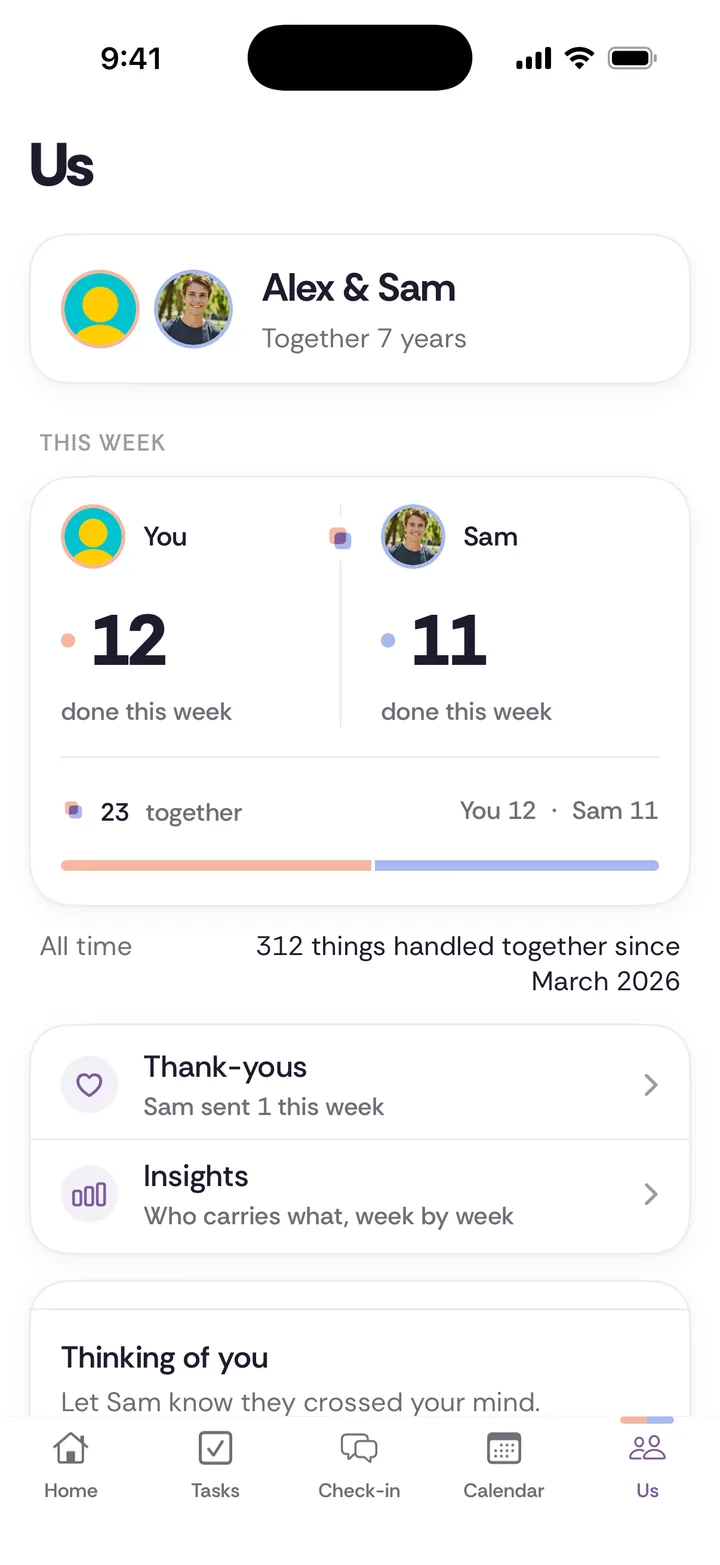
Tiptoe can hold a discussion topic and follow-up tasks, but web launch does not include bank linking, transaction imports, a bills tracker, or an expense ledger. Use it for the conversation and rely on the appropriate tools for the financial work itself. You do not need to love money talks to make one useful. Choose the question, share the information, agree the next step, and stop when that job is done. Dinner is allowed to become the subject again.