Two invitations arrive, both describing their meal as the obvious place you will be. Your partner says it will probably be fine. You start calculating whether it is physically possible to eat twice and travel between the meals without either family noticing that you have already had pie. Before you volunteer for a holiday endurance event, decide what the two of you actually want to offer.
This guide is about planning and talking, not the right way to celebrate. Your families might celebrate Thanksgiving differently, include chosen family, or not observe it at all. You get to decide what belongs in your own household's plan. The goal is a clear answer you can both stand behind, even if somebody would have preferred a different one.

Find the part each person cares about
Talk to each other before promising a date or time to anyone else. Ask what matters about the holiday: seeing a particular person, sharing a familiar meal, attending a tradition, hosting, or having time at home. Try to separate the meaningful part from the assumption that it must happen in the usual place at the usual hour.
Each partner should have room to describe their own family expectations without being appointed the problem. A family can be disappointed without your partner having caused a crisis by caring about them. Write the important details down. If you discover that one person cares most about Thursday lunch and the other about a relaxed visit, there may be more options than the original invitations suggested. If both want the same slot, acknowledge the real tradeoff instead of pretending better scheduling will make it disappear.
Count travel time as part of the plan
Look at the whole day, including packing, travel, parking, setup, and the trip home. Use the actual travel information you have and leave room for uncertainty. Do not build a plan that works only if every handoff happens perfectly. Two meals may sound fair on paper and leave both people spending the holiday watching a clock.
Agree how much travel and spending you can manage before discussing exact arrangements with family. If money is part of the decision, use a focused money conversation to choose what fits your household. Nobody needs a detailed defense of every expense. You do need a shared understanding of the limit. Consider whether a shorter visit on another day would feel better than rushing through the main meal. A plan that acknowledges travel honestly is kinder than a promise you will spend the day struggling to keep.
Put a few real options on the table
You might alternate the holiday by year, see one family on a different day, host if you want to, or spend the day at home and arrange separate visits. These are options to discuss, not a ranking of considerate choices. Hosting is not automatically the neutral solution; it creates preparation, cooking, cleaning, and coordination work that someone will have to own.
For each option, name the benefit and the cost. Alternating may be clear but difficult in a year when someone cannot travel. Two visits may allow everyone time together but use another weekend. A home day may offer rest and require disappointing an expectation. Look for the plan you can both support rather than the plan with no possible objection. That one tends to be unavailable, even when the calendar looks very spacious. You can make an agreement for this year without promising it for the next twenty.
Tell people clearly and early enough to plan
Once you decide, communicate the actual arrangement. An example: ‘We are spending Thursday at home this year. We would love to come for lunch on Saturday if that works.’ State what you are offering before explaining every reason. Too much explanation can accidentally make a finished decision sound like an invitation to negotiate each individual detail.
Each partner can take the lead with their own family if that suits you, while using the same agreed message. Avoid making one person the villain: ‘My partner will not let us’ is not the same as owning a shared decision. If the first conversation is difficult, take time before responding again. You can acknowledge disappointment without immediately replacing the plan. For an opening that stays direct, see how to bring up something small. Holiday decisions can be bigger, but specific language still gives the discussion something clear to work with.
Share the jobs around the invitation
Once the plan is agreed, list the practical work it creates. Who confirms times, arranges travel, brings food, checks dietary needs, and packs what you need? If you are hosting, include the work after everyone leaves. ‘We will host together’ can hide an impressive quantity of planning in one person's head unless you name the responsibilities.
Use the approach in splitting chores fairly to assign whole areas with a clear standard. One partner can own confirming guest details and the other the shopping plan, for example. Check whether either area is much larger than you first thought. A shared list can hold the shopping, but it does not appoint an owner of the meal. Make the next action clear enough that nobody has to ask, on the busiest morning, whether you assumed the other person had called someone.
Save the agreement, then let this year happen
Write down the arrangement and when you want to revisit it. Include anything that would change the plan, such as travel becoming impractical. After the holiday, talk about what felt good and what you would simplify. Do not turn one difficult journey into a permanent rule without discussing it. Circumstances and preferences can change, and your shared agreement should have room for that.
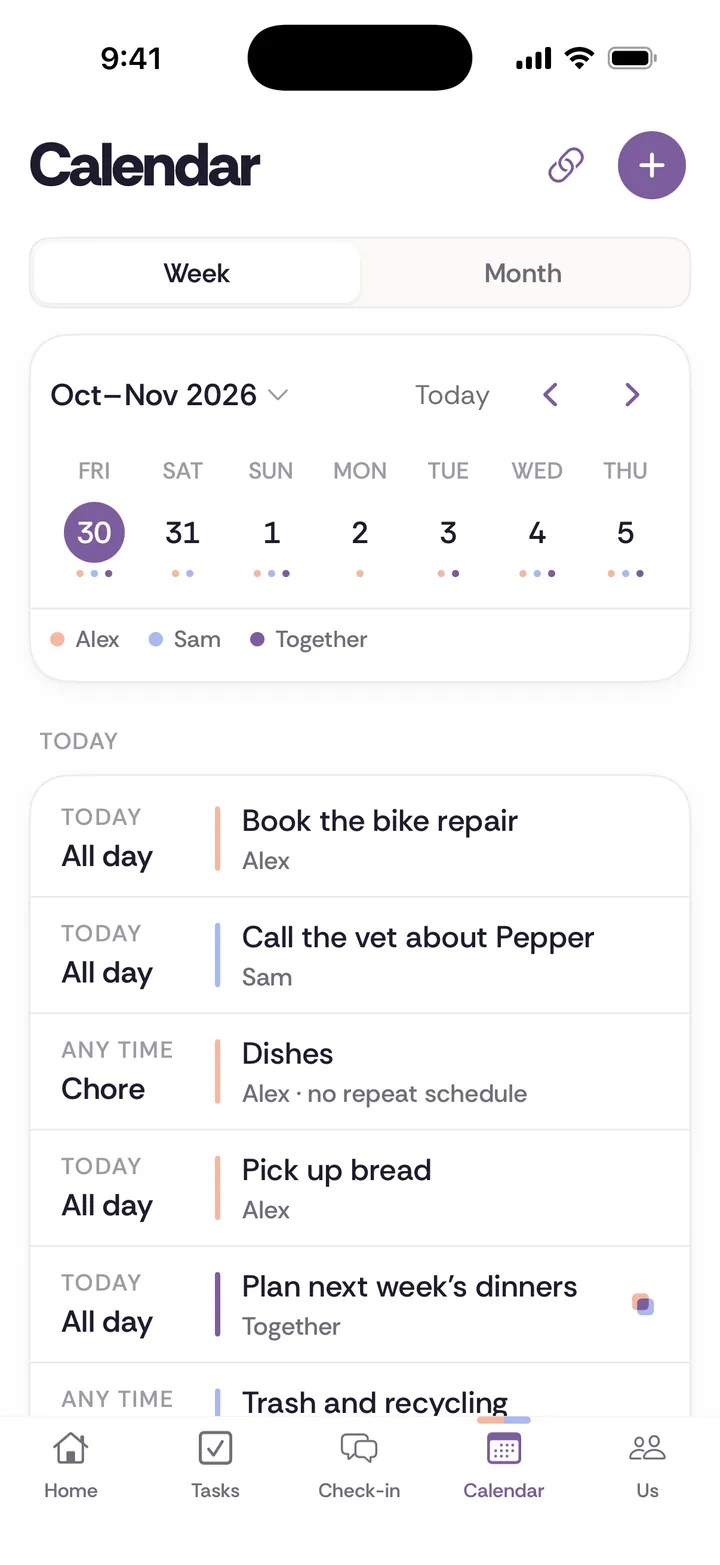
Tiptoe can hold the holiday topic, key dates, and the practical tasks, but it cannot negotiate with family or book travel for you. Queue the topic only when you are ready for your partner to see it, then choose a time to talk. A clear decision will not guarantee that everyone is delighted. It can mean the two of you know what you promised, what you need to do, and when you can finally sit down and enjoy a single plate of pie.