You are not arguing about one mug. You are arguing about being the person who notices the mugs, finds the clean ones, buys the washing-up liquid, and finally asks someone else to wash a mug. Meanwhile, your partner may be doing a different collection of jobs that never enters this conversation. Counting the visible chores will not tell you much until you can both see the whole job.
A fair split is an arrangement you both understand and can keep adjusting. It does not require identical columns or pretending that every week has the same amount of spare time. Start with a small part of the household. The kitchen is usually willing to provide evidence.

Write down the work before dividing it
Choose a normal week and list the things that keep it moving. Include food, cleaning, laundry, appointments, household supplies, pets, and social plans where they apply. Add the bits before and after the visible task. Groceries include checking the fridge, choosing meals, shopping, and putting things away. A repair includes describing the problem, arranging access, and following up if nobody arrives.
Write your own lists separately, then compare. This is a way to discover work, not to prepare competing opening statements. If your partner names something you had not considered, ask what it involves. Do not immediately translate it into how long you think it should take. A five-minute phone call can require three attempts during working hours. Keep the list specific enough to talk about, but stop before you are cataloguing every spoon.
Separate an errand from a responsibility
An errand has an end: buy a bag of pet food. A responsibility continues: keep the pet supplies sorted. You can share either kind of work, but trouble starts when one person believes they own the responsibility and the other believes they were only asked to perform the errand. Neither interpretation gets dinner into the bowl by itself.
Pick whole areas that one person can reasonably own. That owner notices, plans, and does the work, or clearly arranges the parts someone else has agreed to do. Ownership is not permission to ignore what your partner needs. It is permission to make ordinary decisions without being managed through every step. For the thinking behind the errand, read mental load and how to share it. If a responsibility is too large, divide it into meaningful parts rather than splitting the noticing from all the doing.
Agree what finished actually looks like
Try this sentence: done means blank, by blank, with blank included. For laundry, your example might be washed, dried, folded, and put away by Sunday evening, including towels. For dinner, it might be enough food for both people and leftovers stored safely afterward. These are examples to negotiate, not universal standards for good people. Your home is allowed to have its own workable version.
Each person should say what matters and what they can let go. One partner may care about clear counters before breakfast; the other may care about not doing noisy jobs late. Find the smallest standard that handles both concerns. If a standard cannot be met with the time available, change the plan. Do not quietly keep an impossible standard and appoint one partner to enforce it. Write the agreement in plain words you would both recognize on a tired Thursday.
Divide by the week you have
Look at paid work, travel, care responsibilities, health needs, and the awkward hours certain jobs require. Ask which responsibilities fit each person's real availability. Equal numbers of chores may still leave one partner carrying the work that can only happen between nine and five. Preferences matter too, but ‘you are better at it’ is not a permanent exemption from learning.
Make an initial split and review it after a week. Choose what you will do when someone cannot manage their area. A useful handoff sounds like: ‘I cannot cover groceries this week. Can you take the whole shop, including checking what we need?’ The receiving partner needs room to say what they can do. If nobody has room, reduce the job where possible. A simpler dinner plan can be a better answer than an argument about who is more exhausted.
Review the arrangement without awarding points
At the end of the week, ask what worked, what kept needing reminders, and what was bigger than expected. Focus on the arrangement. If groceries failed because neither person could get to the shop before closing, blaming memory will not change the opening hours. Move the job, change the day, or choose a different method together.
Use a weekly check-in to give that review a predictable home. Keep appreciation separate from bargaining. You can say thank you for the laundry without announcing that you now expect dinner in return. If something small keeps being missed, bring it up specifically instead of saving a long list for the next disagreement. A fair system should make effort easier to see, not turn the relationship into a points table with an increasingly complicated appeals process.
Try one area before rebuilding the house
Choose the responsibility that creates the most repeated friction. Write its boundaries, agree the standard, name an owner, and decide when you will revisit it. Give the owner enough information and access to do it independently. Then resist supervising every harmless choice. The brand of sponge is probably not where your shared future needs its strongest governance.
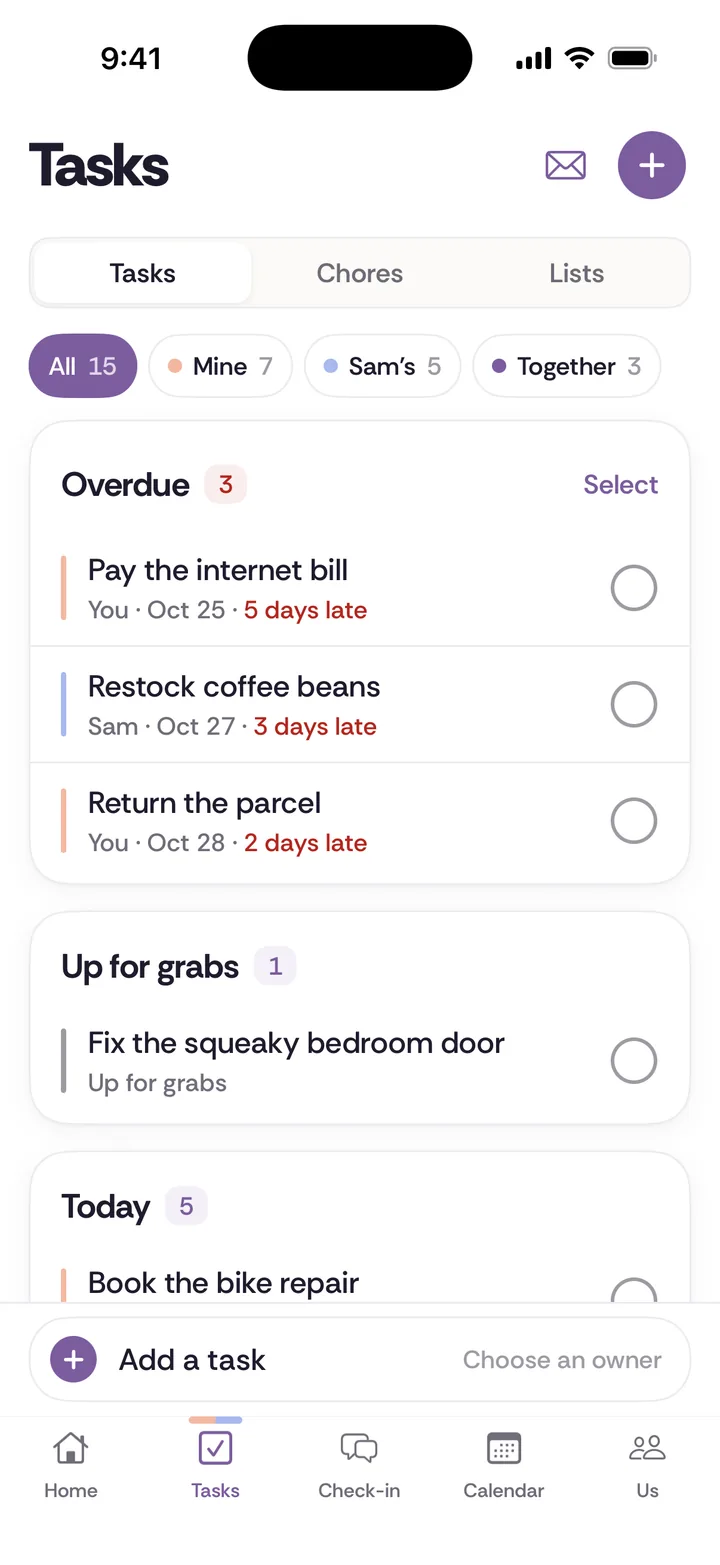
Tiptoe can hold chores, tasks, and the weekly review, but it cannot decide a fair split or make either partner participate. The useful work is the agreement you make together. Start with one job this week and see whether it stops requiring reminders. When it does, use the same approach on the next recurring snag. Leave room for a life beyond keeping the house operational, including a date that nobody has to earn by finishing their column first.