Most couples do not need a longer list of date ideas. They need a smaller path from 'we should do something' to a plan both people want. The usual friction is hidden in choosing, checking schedules, booking, budgeting, arranging transport or childcare, and remembering to follow through. A hundred clever suggestions do not solve that work.
Use this page as a planning system, then borrow the ideas that fit your actual week. Start with constraints, vote separately, pick the smallest next action, and put the result on the shared calendar. A date can be ten minutes on a Tuesday or a planned weekend away. It counts when you both choose it.
Start with the shape of the evening
Before naming activities, agree on time, energy, budget, travel, and whether you want to stay home. Try a simple brief: ninety minutes, under $40, no driving, and low planning. Constraints reduce the burden of choosing and prevent one partner from researching ideas that never had a chance.
Use three energy levels. Low might mean dessert and one episode with phones away. Medium could be a neighborhood walk and dinner somewhere familiar. High could be a class, show, day trip, or hosted meal. Match the plan to the energy you expect, not the energy you wish you had.
Vote privately before negotiating
Each partner chooses yes, maybe, or no on a small set of ideas. Private voting removes the pressure to agree because the other person looks excited. Collect the options in a shared list, then put the one you choose on the calendar.
Keep the deck small enough to finish. Add ideas that represent different budgets and energy levels. Once you have a match, stop browsing. More options can feel productive while quietly delaying the decision.
Use repeatable ideas for ordinary weeks
Create a short menu you can reuse: breakfast before work, a walk with one shared playlist, cook a new meal, trade favorite essays, visit a bookstore, take dessert to a park, play a two-person game, or revisit a place from your first year together. Repetition is not failure. A familiar date has less planning cost.
For home dates, mark the beginning. Clear one surface, change the lighting, put phones away, or make one drink you do not have on ordinary nights. The signal matters more than turning the house into a themed event.
Give planning one owner
A mutual yes still needs a next step. Name who checks the hours, books, buys tickets, arranges childcare, or chooses the route. Ownership can rotate, but do not rely on 'we'll figure it out.' Together often means the more attentive partner carries the background work.
Define the budget and finish line so the owner can act without repeated approval. If the plan costs more than agreed or changes substantially, return for a decision. Otherwise, let the owner handle the details in their own way.
Put the plan where your week lives
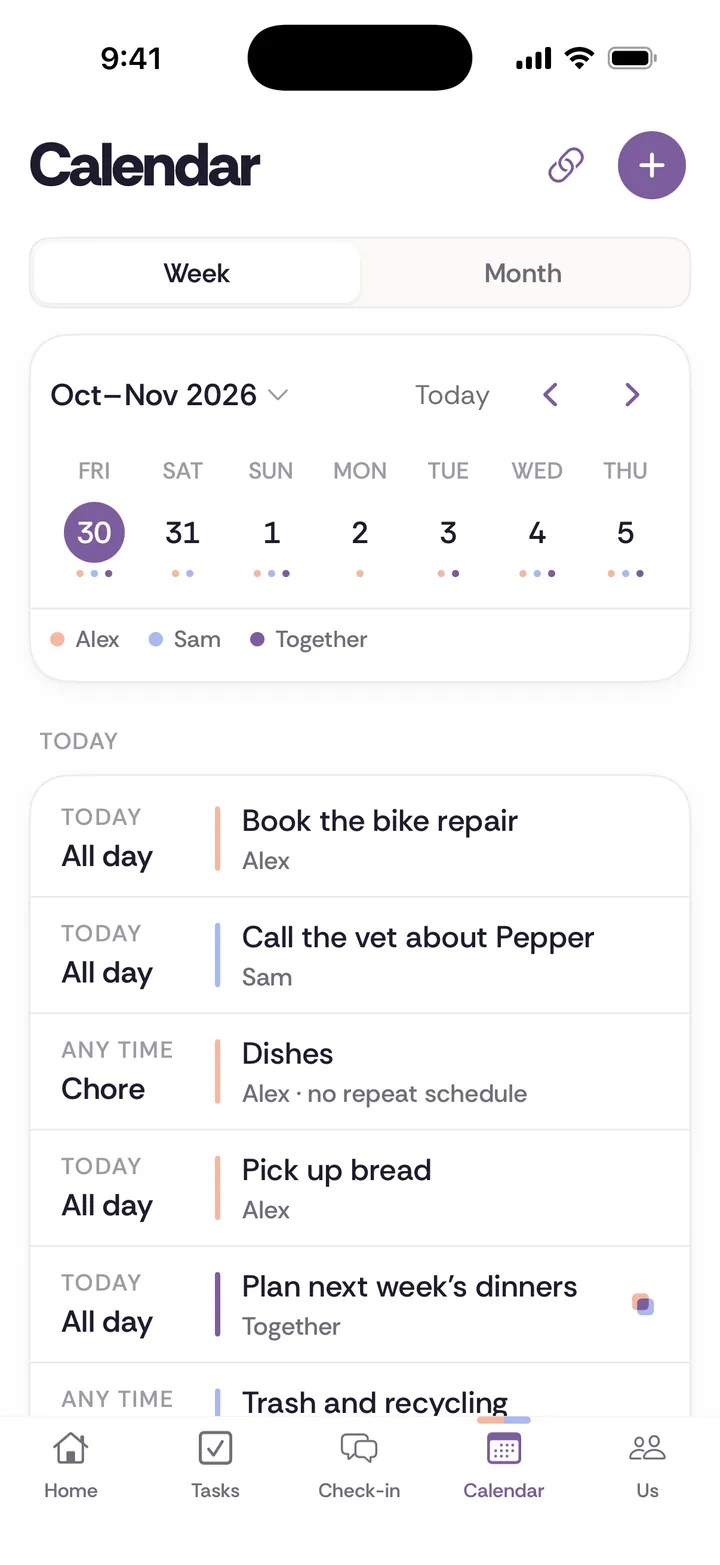
Choose a date and add it to the shared calendar. Include booked details, the planning owner, and any preparation task. If the idea remains unscheduled, decide when you will revisit it. A date idea list can become a museum of good intentions unless something moves to the calendar.
Tiptoe keeps date matches, plans, calendar events, and reminders together. Afterward, it can nudge you to save a memory with a photo or a line. The memory is optional. The point is to make the shared yes easier to carry through.
Plan for cancellation without losing the habit
Decide what happens when energy or logistics collapse. Keep a low-effort backup that preserves the time together, or reschedule immediately. Do not force a high-effort plan when one partner is depleted. The ritual is choosing time together, not proving that the original itinerary survived.
At the weekly check-in, glance at your next date and any waiting matches. Ask whether the plan still fits the week. One small adjustment on Sunday is easier than a disappointed exchange five minutes before you were meant to leave.
Questions couples ask
How do we stop date ideas from staying ideas?
Limit the options, find a shared yes, assign the next planning action, and put the confirmed plan on the calendar.
What are easy date ideas for a tired week?
Try dessert and one episode, a short walk with a shared playlist, breakfast before work, a familiar game, or one new recipe at home.
How does Tiptoe help with date night?
Keep ideas in a shared list, put the date on the calendar you both see, and give the planning one owner. Tiptoe does not book anything for you.