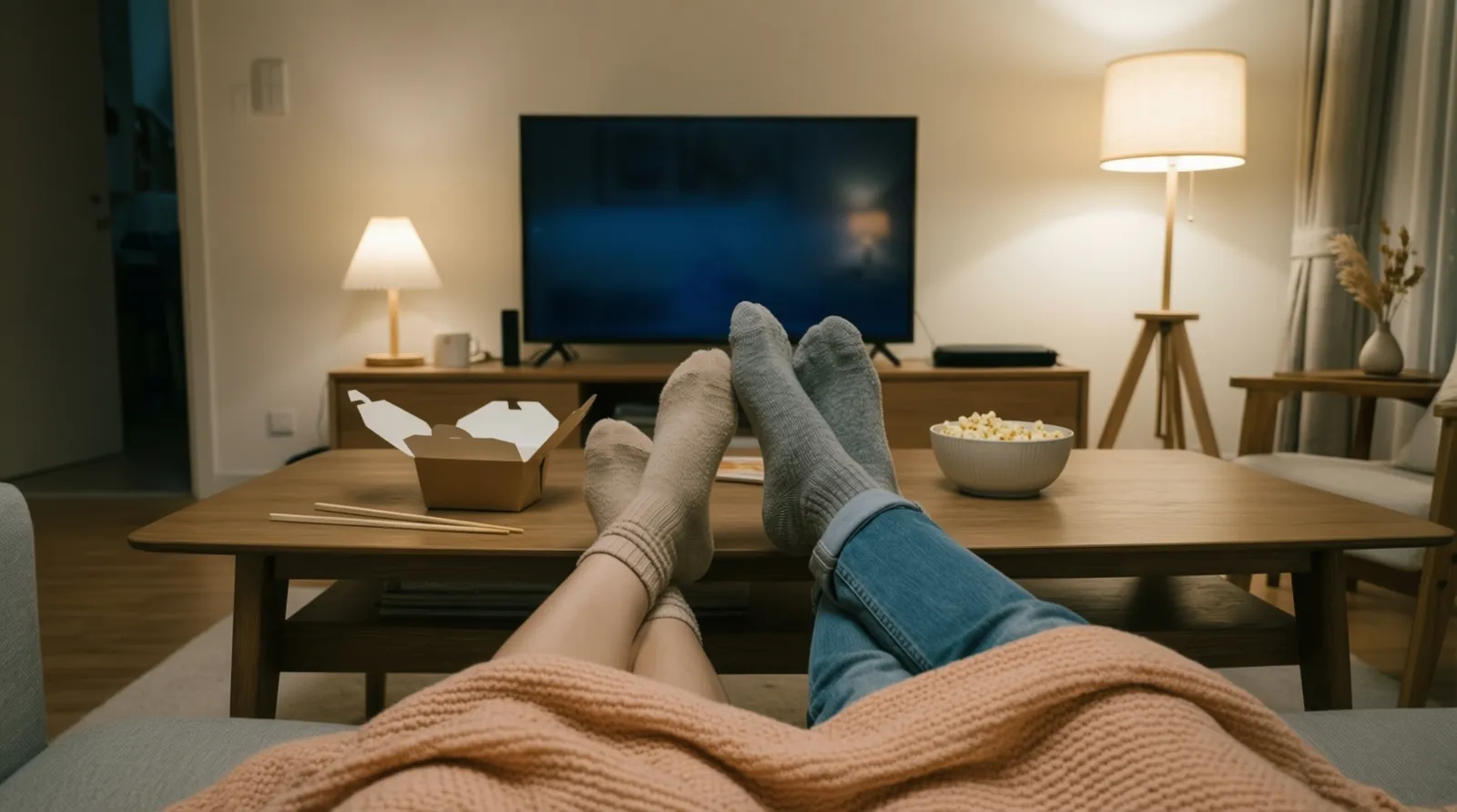
Dinner and a movie are allowed to remain good ideas. They just do not need to hold an exclusive contract on your time together. When picking a date starts to feel like another task, choose something with a small setup and a clear beginning. The date does not have to look impressive to people who are not on it.
The examples below come from the app's date-idea seed deck, with practical suggestions for making them your own. Treat them as starting points, not bookings or promises about local availability. Agree on the time, cost, and setup together. Then let the result be a slightly odd evening you both wanted, rather than an event one person worked very hard to make the other enjoy.
Start with the evening you actually have
Before choosing an activity, name your constraints. Are you staying home? Is there time to prepare anything? Does one of you want quiet while the other wants to get out? Saying those things early saves the familiar exchange in which ‘anything is fine’ somehow eliminates every suggestion. Pick a small range of options that could genuinely work tonight.
Choose separately if it helps you avoid agreeing just to end the discussion. Each person can say yes, maybe, or no without defending every preference. A mutual yes is a useful place to start. A no does not require a substitute suggestion on demand. If you are trying to make room around a crowded week, the weekly check-in can hold the planning. Keep the date itself from becoming the next installment of that meeting. The bin schedule can survive an evening without your attention.
Living room picnic: change the setting, keep the food
The seed idea is simple: spread a blanket on the floor and turn whatever is in the fridge into a picnic plate. You do not need to shop for a picturesque assortment of things neither of you normally eats. Choose food that works for you, clear enough space to sit comfortably, and move the phones somewhere they will not keep joining the conversation.
Decide who handles the small amount of setup and who clears away. That may sound practical for a date guide, but it prevents a romantic picnic from becoming one person's surprise cleaning shift. If sitting on the floor is uncomfortable, use the table or sofa and keep the change of pace. You are allowed to adapt an idea to your bodies, home, and energy. The blanket is an invitation, not a compulsory admission requirement. Bring a question you actually want to ask your partner and let the evening stay small.
Two-song time machine: let the music do the opening
Each of you chooses one song from childhood and one from when you met, then shares the stories behind them. That is the whole seed idea. You can prepare the choices separately or pick them together. Take turns playing a song and explaining where it takes you. A story about an embarrassing bus journey is just as useful as something grand and romantic.
Try asking what the other person remembers about that period, who introduced them to the song, or whether they still like it. Do not turn the evening into a taste competition. You are learning something about a person, not choosing the household's official best album. If you have different musical preferences, that can supply the conversation rather than prevent it. Keep a few notes afterward if there is a detail you want to remember for a future surprise. For that habit, read gift ideas you will remember.
Portraits with the wrong hand: make bad art on purpose
Draw each other with your less-used hand and give the finished masterpieces very serious titles. The seed deck offers a creative date where skill is spectacularly beside the point. Use whatever paper and pens you have. Give yourselves a short drawing window if a blank page feels intimidating, then reveal the results together. You can also skip the hand constraint if it is uncomfortable or inaccessible.
Choose the tone together. Laughing at a wobbly drawing is different from making a joke about something your partner dislikes about their appearance. Keep the commentary on the artwork and the artist's questionable command of elbows. Display the portraits for the evening, or give each other permission to retire them immediately. Nobody needs an unwanted permanent exhibition above the bed. If the idea works, you could try drawing a place you remember together next time. That is your adaptation, not an additional product feature or an art qualification.
Blanket fort reading: make time to read
The seed idea is to build a small blanket fort and read a favorite short story aloud inside it. You can also make a comfortable corner without constructing anything. Choose something you both want to hear, agree whether you are taking turns, and bring enough light to read easily. Keep the setup modest enough that you still have an evening after arranging the cushions.
This one can suit a night when conversation feels tiring but time together still sounds good. Silence between pages is allowed. If reading aloud is not comfortable for either of you, adapt the plan to quiet reading side by side and share a favorite part afterward in your own words. The shared choice matters more than performing the instructions exactly. Make the clearing-up plan easy too. For jobs that keep intruding on relaxed evenings, split responsibilities clearly so the fort is not surrounded by an unspoken chore negotiation.
Turn the mutual yes into an actual plan
Pick one idea, a time, and who will arrange the small practical pieces. Avoid collecting twenty possibilities and congratulating yourselves on having planned a date. A plan needs a next step. If this week's idea turns out to be a maybe, choose something else without treating the change as a rejection of the person who suggested it.
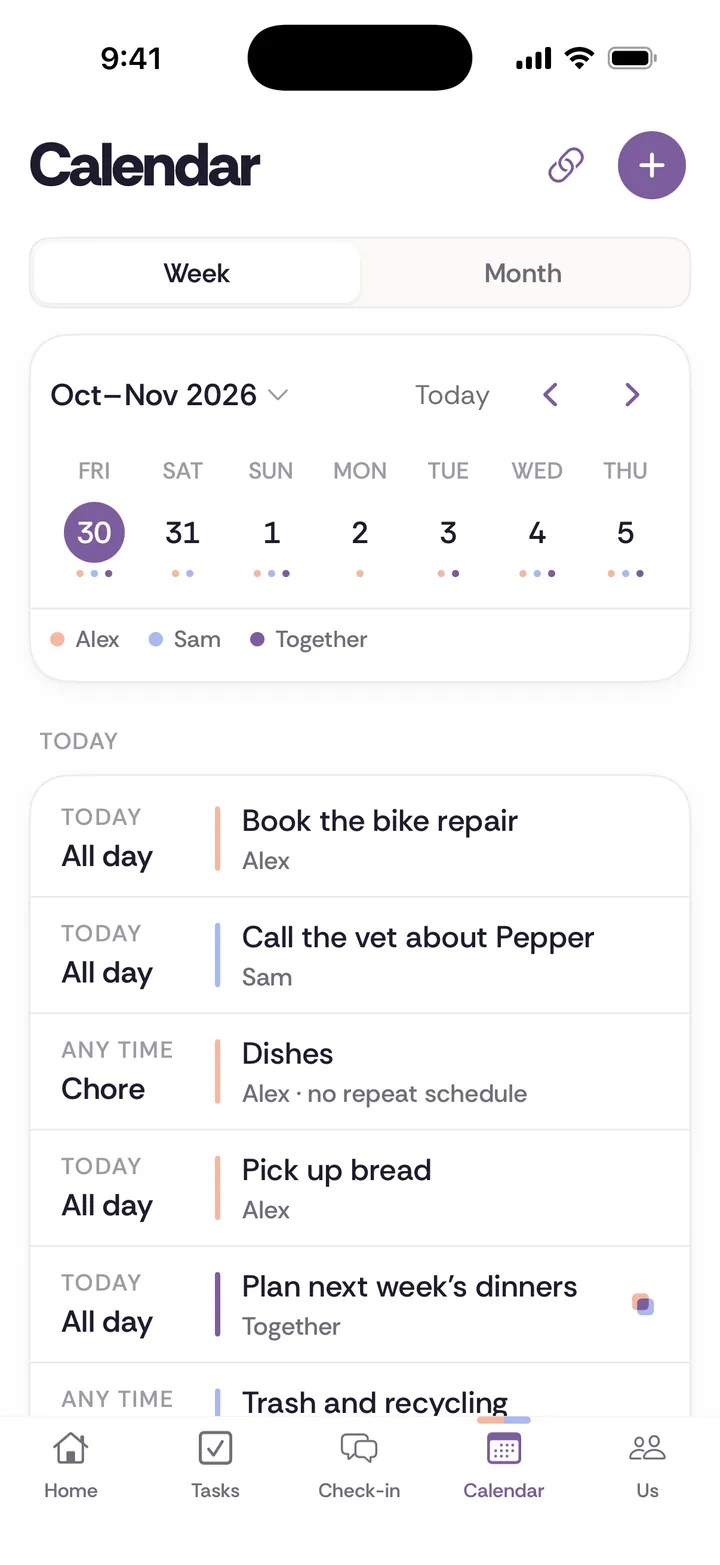
Tiptoe puts the plan on a calendar you both see and gives the arranging to one owner, but it does not book the activity or guarantee that an evening will go a certain way. You bring the attention, the willingness to adapt, and perhaps the questionable portrait skills. Choose an idea that feels possible this week. The aim is to spend time with the person you picked, not to produce a flawless evening that requires a recovery day afterward.