To divide wedding planning, decide the budget, date, guest count and overall feel together, then give each person whole areas to own from research through final confirmation, such as the venue and food for one and guests and music for the other. A bride and groom, two brides or two grooms can all use the same split, since it depends on what each of you wants to own and not on tradition. A checklist with owners is below.
A wedding is a useful test of how you run a home together, since it is the same work on a shorter clock: noticing, planning, doing and following up. If one partner runs the spreadsheet while the other approves choices, you may well have the same pattern after the wedding. So it is worth setting this up on purpose, and the structure here will outlast the day.
Why does wedding planning so often fall to one person?
Usually nobody chooses it. One partner replies to the first venue, starts a spreadsheet, and is now the person vendors email. Family members start calling them. After a month, the other partner is saying, "Just tell me what you need me to do." That partner may mean well, but it leaves one person running the project and managing the other.
"I do not care, whatever you want" can be another version of the same thing. It sounds easygoing, but it can mean one person does every comparison and takes every risk. It is fine not to care about napkins. It helps to say what you do care about, and to take something you will run in return.
There is a subtler version, too. One partner does all the research, narrows it to three options, and the other picks. Both of them can feel they shared the decision. But most of the work was in the narrowing. Researchers who study household thinking work separate noticing and researching from the final decision, and our data summary links that work. The four jobs guide shows how to apply the idea, and it fits a wedding as easily as a fridge.
What should you decide together first?
Hold one sit-down before you divide anything. These are not jobs to hand off, because they shape everything else.
- Total budget. Who is paying, and how much. If families are contributing, ask what it comes with.
- Guest count. A rough number, because it drives venue and food costs.
- Date or season. And any dates you need to avoid.
- Where. Near which family, or somewhere else.
- Each person's three things. What three things do you each care about most? And what do you not care about?
- Decision rules. Which decisions need both of you, and which can the owner just make?
- How families are involved. Who talks to which family about what.
A useful rule on families is that each partner handles their own. It is usually easier to hear "we are keeping the list to 80" from your own child than from your child's fiance.
For money, this is also a good point to discuss how you handle costs in your life together. The couples money guide and money conversation script both help.
What does whole-area ownership look like?
Owning an area means the person handles every part of it without being reminded.
Take the caterer. The owner:
- Notices that the caterer needs to be booked soon, and that the guest count has changed
- Plans by finding three options, checking the budget and reading the contract
- Does it by booking the tasting, paying the deposit and sending the final numbers
- Follows up by confirming the date a week ahead, and checking that the allergy list has arrived
The other partner goes to the tasting, gives an opinion and enjoys the food. They do not need to wonder whether the deposit was paid. That is what you are both trying to get to.
The wedding planning checklist, divided into areas
Use these as areas, not as an assignment. Write one name next to each heading. If it is "together", write down who is responsible for making sure it happens. Timing depends on your wedding and your vendors, and some will need much longer or shorter lead times. Ask each vendor early.
Area 1: Budget and paperwork
- Create the budget with a line for each area
- Track deposits, due dates and final payments
- Collect all contracts in one shared folder
- Compare insurance if your venue asks for it
- Find out your marriage license requirements and dates where you are marrying
- Arrange for your officiant, and find out what they need
- Change names or documents afterward, if either of you is doing this
Area 2: Venue and logistics
- Shortlist venues within budget, and visit them
- Read the contract, including rules on vendors, noise, end time and rain plan
- Plan a wet-weather option
- Check access, parking and transport for older guests
- Arrange accommodation options for out-of-town guests
- Draw the day's timeline with the venue or planner
- Plan who takes things to the venue and who collects them
Area 3: Guests and invitations
- Build the list from both families and your friends
- Collect addresses
- Choose and send save-the-dates and invitations
- Set up a wedding website, if you want one
- Track RSVPs, meal choices and allergies
- Follow up with people who have not replied
- Create the seating plan
- Answer questions from guests
Area 4: Food and drink
- Shortlist and taste
- Agree on the menu and what is served to children and vendors
- Decide how alcohol will work, and what it costs
- Choose a cake or dessert
- Send final numbers and allergy details
- Check on who is tipping and how much
Area 5: Ceremony
- Discuss what you want the ceremony to mean and say
- Meet with the officiant
- Write vows, if you are doing so, and agree on the length
- Choose readings and readers
- Choose who walks with whom, including who has a role
- Order or borrow what you need: rings, license, chairs, sound
- Run a rehearsal
Area 6: Clothes and looks
- Each person handles their own outfit, fittings and shoes
- Decide what wedding party members will wear and who pays
- Book hair and makeup, if needed
- Buy rings and get them sized
Area 7: Photos, music and atmosphere
- Book a photographer or video
- Write the list of must-have photos, including family groups
- Book band or DJ, and share the do-not-play list
- Choose the first dance, if you want one
- Flowers and decorations
- Choose lighting, signs and what happens after dark
Area 8: People and family
- Choose the wedding party and tell them what you expect
- Manage each family's expectations, each partner handling their own
- Plan how to manage difficult relationships, including seating
- Plan the rehearsal dinner or any welcome event
- Buy gifts for anyone you want to thank
- Write speeches, or ask who is giving them
Area 9: Final weeks and after
- Confirm every vendor, and share the timeline with them
- Print or share a day-of contact sheet, and give it to someone who is not you
- Pack a bag for the day: vows, license, rings, tips, phone chargers
- Assign a friend to handle problems on the day
- Plan your honeymoon or at least your first week back
- Send thank-you notes
- Return rentals and pay the final balance
- Put the wedding folder away, and cancel the wedding website
A sample split
Here is one way that a couple might divide this, just as an example.
- Partner A: Budget and paperwork, guests and invitations, plus their family.
- Partner B: Venue and logistics, photos and music, plus their family.
- Together, with one person responsible: Ceremony (A), food and drink (B).
- Each on their own: Outfits.
- Assigned to a friend or planner: Day-of problems.
Then look at it for balance. Guests and invitations can be a lot of ongoing work, while a venue is a large effort early and much less later. Discuss whether the amount of work seems fair to you both, and do not assume that one area equals one area.
How do we stay out of each other's way?
Set a weekly wedding meeting, and keep it short. Twenty minutes on a set day is enough for most weeks. What was decided, what is due next, and what do you need from me? Outside this time, you do not have to talk about the wedding. A weekly check-in format works well for this.
Set a "no wedding" night. Agree on one evening a week or one regular date night when you do not discuss it at all.
Trust the owner's calls. Within the budget and the decision rules, the owner decides. If you find yourself redoing their research, you are taking it back.
Use one list. One shared place for all tasks, with an owner and a date. If only one person has the list in their head, you already have a problem.
Name it when it drifts. Try: "I noticed that vendors have started emailing only me. Can we fix that? Could you take the florist from here, including replies?" More on this in how to bring up something small.
What words can you use when you need to rebalance?
If one of you is already carrying this, you can say so simply, without a big fight.
- "I have ended up running most of this, and I do not think either of us chose that. Can we go through the list and move two whole areas to you?"
- "When you ask me what you can do, I have to stop and work it out. Could you own the guest list from here, and tell me if you need a decision?"
- "I do not actually mind doing the invitations. But I need you to take the music and transport completely, so that I can stop thinking about them."
And if you are the partner who has been less involved:
- "I have been leaving this to you, and I do not want to. Which part would take the most off your mind if I owned it all?"
- "I will do the reading and bring you a recommendation, so you do not need to research it."
What about after the wedding?
The same questions return in your first year: who holds the calendar, who writes the thank-you notes, who handles name changes and insurance. If you have used owners and a weekly review for a wedding, you can keep the same system for the home. See how to split chores fairly and the list of household chores.
If you notice that wedding decisions come with fear, threats or being kept from people or money, that is not a planning problem. Please see our safety page.
Where should the checklist live?
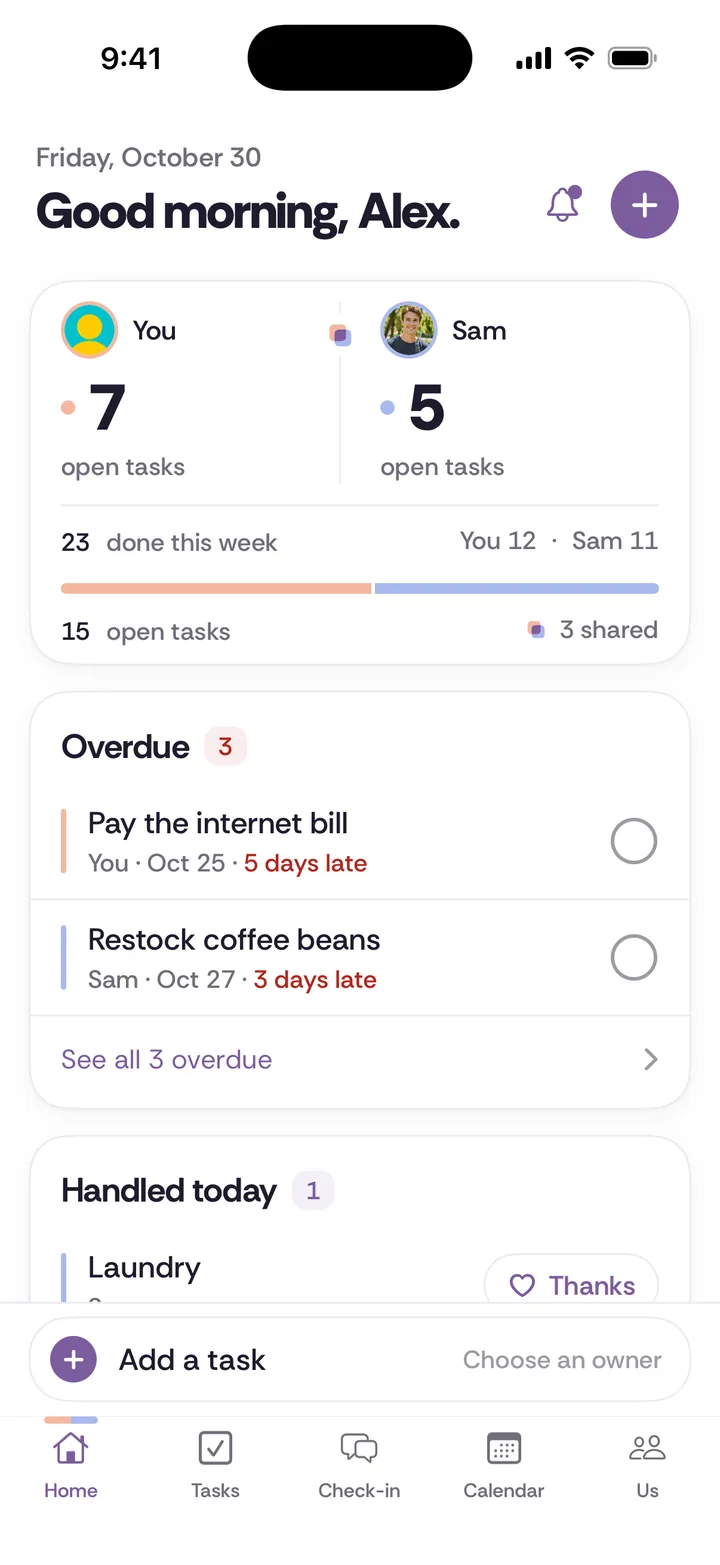
A shared spreadsheet or document costs nothing and handles this well. Add columns for owner, due date and status. If you would like it alongside your home tasks, Tiptoe is a free app for iPhone and web where tasks go to you, your partner or both together, with dates on a shared calendar. Your first 30 tasks and chores are free, and a wedding list can pass that quickly, so a spreadsheet may suit you better for the full plan.