A complete list of household chores for couples covers more than 100 recurring jobs across the kitchen, laundry, cleaning, outdoors, money, people, pets and children, and the 113 below are a solid start. A useful list also includes the invisible part of each job, which is noticing it needs doing, planning it, doing it and following up, because that part is often what one partner, whether a husband, wife, boyfriend or girlfriend, ends up carrying alone.
Most chore lists stop at the verbs: vacuum, dust, mow. That is the visible third of the work. Use this page as an inventory. Cross out what does not apply, add what is missing, and write one name beside each item you keep. Frequencies are starting points and not rules. A couple with a dog and a toddler vacuums on a different schedule from two people who are home three nights a week.
How do you use this list without starting a fight?
Step 1. Print or copy it, and go through it together when neither of you is tired or mid-chore.
Step 2. Mark each item with who actually did it in the last month. Not who should have. If you disagree, write both answers down and move on. People often see the same week differently.
Step 3. Cross out anything you are both happy to stop doing. A shorter list is a real result.
Step 4. Group what is left into whole areas, such as "dinner on weeknights" or "laundry", and give each area one owner, as the complete chore split guide explains. Owner means the person handles all four jobs, not that they do it alone forever.
Step 5. Review after a week and adjust. A weekly check-in is a good place for that.
Daily chores
Kitchen and food, every day
- Decide what is for dinner
- Cook or assemble breakfast, lunch and dinner
- Pack lunches
- Load the dishwasher or wash dishes
- Unload the dishwasher or put dishes away
- Wipe the counters and stove
- Clean the sink
- Put away leftovers and throw out anything that has turned
- Add what ran out to the shopping list
- Take kitchen trash or compost out when full
Around the house, every day
- Make the bed
- Open and sort the mail
- Clear shoes, bags and coats from the entry
- Quick tidy of the main room before bed
- Wipe the bathroom sink and hang towels properly
- Lock up and check the stove at night
- Move wet clothes to the dryer or rack before they sit
- Charge the shared devices and find the keys
People and pets, every day
- Feed pets and refresh water
- Walk the dog
- Scoop the litter box
- Morning routine with children: wake, dress, feed, bags
- School or daycare drop-off and pickup
- Bedtime routine with children
- Give daily medications or check they were taken
- Reply to the family group chat or the school message that needs an answer
Weekly chores
Cleaning, every week
- Vacuum carpets and rugs
- Sweep and mop hard floors
- Clean the toilet
- Clean the shower or tub
- Clean bathroom mirror, sink and counter
- Dust surfaces and shelves
- Change bed sheets
- Wash bath towels and kitchen towels
- Wipe the microwave inside
- Wipe the fridge handles, light switches and door knobs
- Take trash and recycling to the curb or chute
- Bring the bins back in
Laundry, every week
- Sort and wash clothes
- Dry or hang clothes
- Fold and put away
- Treat stains
- Wash children's uniforms or sports kit in time
Food and shopping, every week
- Plan the week's dinners
- Check the fridge and cupboards before shopping
- Write the grocery list
- Do the grocery shop or place the order
- Unpack and put groceries away
- Clear out the fridge before the new shop
Admin and people, every week
- Look at the shared calendar for the week ahead
- Confirm who is doing which pickup or appointment
- Sign school forms and pay school fees
- Plan one thing to do together
- Water houseplants
- Pay any bills not on autopay
- Clean up the dog's yard area
Monthly chores
Inside the house, every month
- Clean the oven and stovetop grates
- Clean out the fridge shelves and drawers
- Clean the dishwasher filter
- Descale the coffee maker or kettle
- Wash shower curtain and bath mats
- Dust blinds, ceiling fans and light fixtures
- Vacuum under furniture and along baseboards
- Vacuum sofas and wash the throws
- Wipe cabinet fronts
- Clean inside trash cans
- Test smoke and carbon monoxide alarms
Money and supplies, every month
- Review the household budget and accounts
- Check subscriptions and cancel what you do not use
- Restock paper goods and cleaning supplies
- Restock medicines and first aid
- Reorder pet food and prescriptions
- Pay rent or mortgage, or confirm autopay ran
- Pay credit cards, or confirm autopay ran
People, every month
- Check the month ahead for birthdays and buy cards or gifts
- Call or message relatives who expect it
- Book the babysitter
- Plan a date night
- Buy children's clothes and shoes in the next size
Seasonal chores, every three to six months
- Wash windows inside and out
- Wash duvets, pillows and mattress protectors
- Flip or rotate the mattress if it is the kind you can
- Replace the furnace or air conditioner filter, on the schedule the manual gives
- Clean the range hood filter
- Clean the dryer vent and lint trap housing
- Clean gutters, or arrange for someone to do it
- Swap seasonal clothes and bedding
- Sort out closets and donate what you do not wear
- Service the car or book the oil change
- Rotate tires and swap to winter tires if you use them
- Book dentist cleanings
- Pressure wash or sweep the patio or balcony
- Rake leaves
- Clear snow and buy salt
- Check that outdoor taps and hoses are ready for frost
- Mow the lawn and edge it in season
- Weed the garden or balcony pots
- Service the lawn mower or heating system
Yearly chores
- File taxes and gather the paperwork
- Renew car registration and insurance
- Review home or renters insurance
- Renew passports and licenses before they expire
- Book annual physicals, eye exams and pet vet visits
- Update vaccinations and keep the records
- Renew the lease or check the mortgage
- Review beneficiaries and important documents
- Deep clean behind the fridge, stove and washer
- Replace smoke alarm batteries where needed
- Plan holidays, travel and who visits whom
- Buy holiday gifts and send cards (here is a full list)
- Plan the summer: camps, childcare and time off
- Sign up for school, sports and activities on the right date
- Decide how much to save and give for the year
Want these sorted only by how often they come up, with a suggested rhythm for the week? See the daily, weekly and monthly chores list.
What are the invisible jobs behind the list?
Every item above has four jobs inside it. This is the idea behind our guide to the four jobs in the mental load.
- Notice. See that it needs doing, before anyone asks.
- Plan. Work out when, how, with what, and who else is involved.
- Do. Carry it out.
- Follow up. Check it worked, restock, and handle what comes next.
A partner can do the "do" on every chore and still leave the other three jobs to someone else. That is what people mean when they say "just tell me what to do." It sounds generous, and it leaves the other person as the manager. Here is what the four jobs look like for common areas.
Dinner on weeknights
- Notice: there is nothing planned for Thursday. The rice is almost out. Someone has a late meeting.
- Plan: choose meals that fit the week, check what is in the fridge, and write the list.
- Do: shop, cook, and clear up.
- Follow up: use the leftovers before they turn, note what nobody liked, and add what ran out.
Laundry
- Notice: the hamper is full, the work shirts have run out, and a trip is coming up on Friday.
- Plan: work out which loads go first and when anything will have time to dry.
- Do: wash, dry, fold, put away.
- Follow up: rewash the shirt with the stain, buy detergent before it runs out, and clean the lint trap.
Bills and money
- Notice: the car insurance renews next month. A charge looks wrong.
- Plan: compare quotes, decide whether to switch, and find out what needs both of you.
- Do: pay, call, sign.
- Follow up: confirm the payment went through, file the paperwork, and put the next date on the calendar.
A child's doctor visit
- Notice: the annual checkup is due, or the cough has lasted too long.
- Plan: find a time that works with work and school, and work out who takes them.
- Do: make the call, go to the appointment.
- Follow up: fill the prescription, book the next one, and tell school.
A birthday in the family
- Notice: your mother-in-law's birthday is in nine days.
- Plan: pick the gift and the budget, and allow time for it to arrive.
- Do: buy it, wrap it, send it.
- Follow up: check that it arrived, call on the day, and note it for next year.
Home repair
- Notice: the faucet has started dripping.
- Plan: decide whether to fix it yourselves, and find out who is available and what it might cost.
- Do: fix it, or book it and let them in.
- Follow up: check that the drip stopped, pay, and save the plumber's number.
20 invisible household jobs that never make the chart
These do not look like chores because there is no single moment when you do them. They still take real attention, and often go uncredited. The mental load examples page has more.
- Knowing what is in the fridge without looking
- Knowing how many days of toilet paper are left
- Remembering which child has outgrown which shoes
- Remembering who has allergies when guests come
- Tracking when the car, boiler or smoke alarm needs attention
- Keeping track of warranties and manuals
- Knowing the school's calendar and early-release days
- Knowing whose turn it is to host
- Finding out whether a babysitter is free
- Researching a new dentist, insurer or daycare
- Reading the school newsletter so someone knows what is in it
- Holding the passwords and account logins
- Being the one the school or doctor calls first
- Reminding people, and judging when a reminder is needed
- Remembering what your partner's family likes as gifts
- Keeping the peace on who visits at the holidays
- Planning how you will cover a sick day
- Thinking about next month's costs before they arrive
- Tracking what was promised to neighbors, friends or relatives
- Noticing when your partner or child seems off and making time to ask
How do you split the list so it feels fair?
The goal is not 50/50 on every line. It is an arrangement you both agree to, on purpose. Three practices help.
Assign the whole job, not the task. "Laundry is yours" works better than "can you put a load on". If you own laundry, you notice, plan, do and follow up. See why whole-job ownership works.
Agree what done means, then let the owner do it their way. Say the standard once, out loud. "Done means clothes are put away, not on the chair." Then stop checking. If you keep checking, you still hold the follow-up job.
Credit the assignment instead of keeping score. A job counts for the person who owned it. Nobody needs a running tally of who did what. If you want a rough sense of hours, the chore split calculator runs in your browser and stores nothing. If your list shows an imbalance, here is how to raise it without an argument.
Where should this list live?
Anywhere you will both look. A shared note or a printable worksheet on the fridge costs nothing and works fine. Put each item's owner beside it, and review it together once a week.
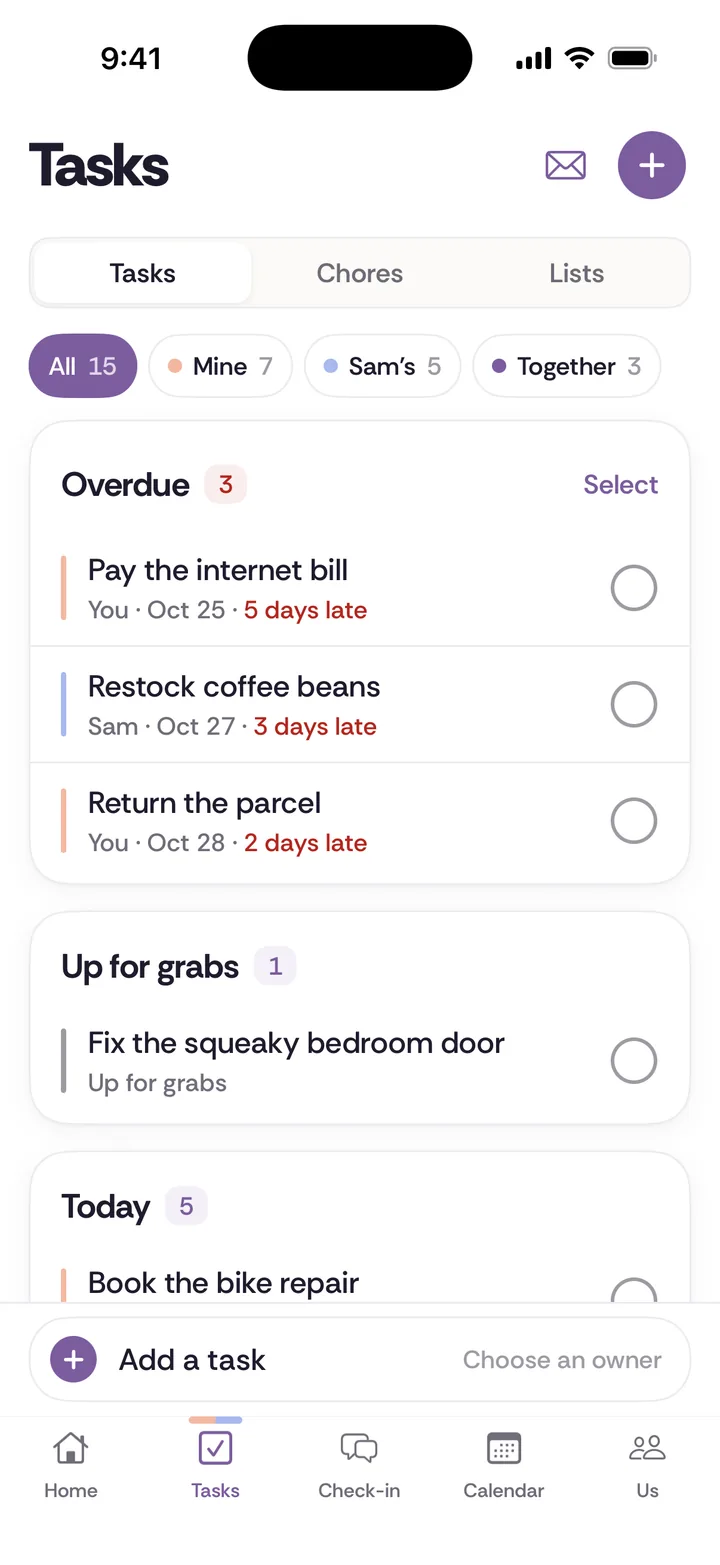
If you would like the list to remind you, Tiptoe is a free shared app for iPhone and the web. Chores repeat on a schedule and have one owner, and a completed one counts for the person it was assigned to. The couple's first 30 tasks and chores are free, with no card.