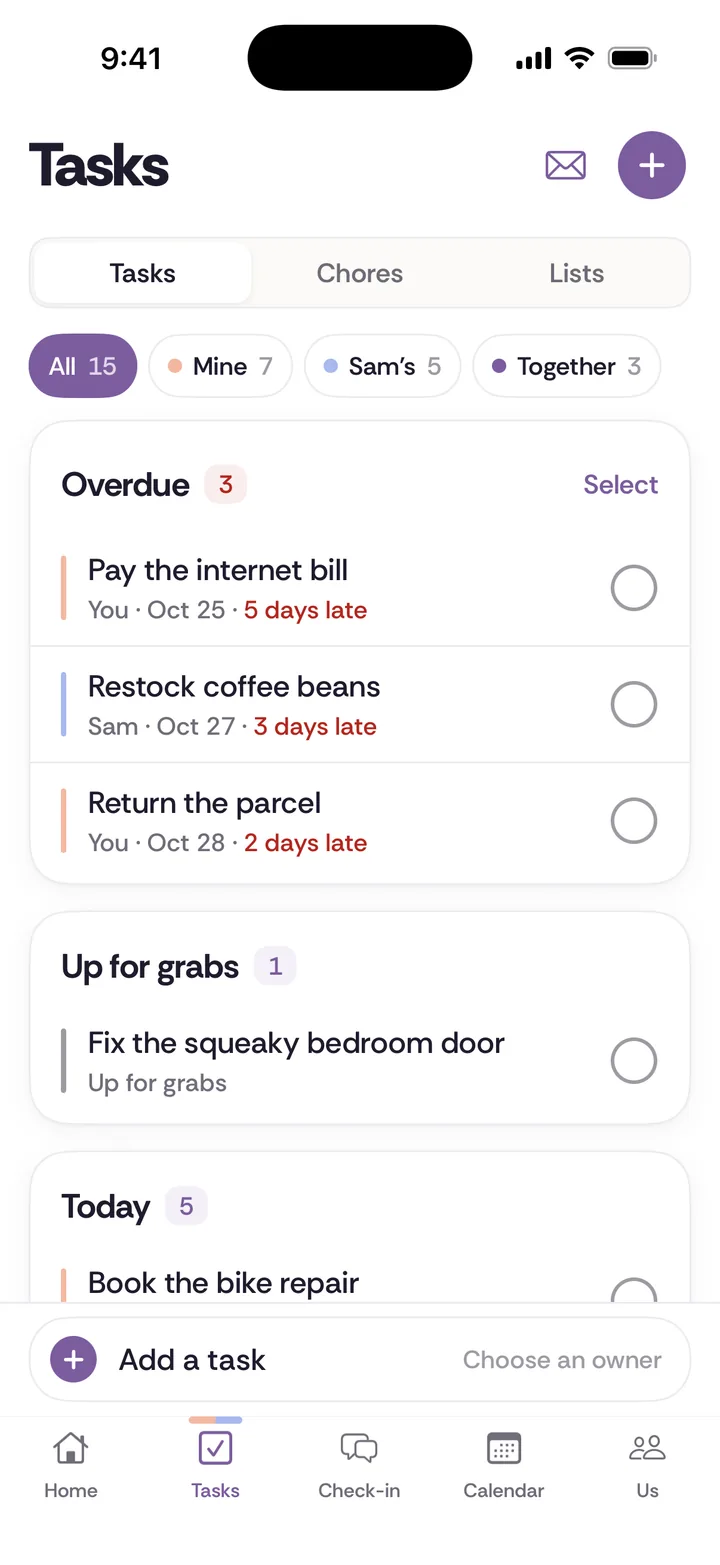
A holiday to do list for couples should start with four decisions made together this week: how much you will spend, where you will be on which day, who is getting gifts, and who owns what. After that, it is a set of whole jobs, each with one name, from booking travel through writing thank-yous, whether you are planning this with a husband, wife, boyfriend or girlfriend.
It is early November, and Christmas Day falls on a Friday this year, seven weeks from now. Most Christmas lists are written for one organized person running a whole family. The trouble for couples is often not the length of the list, but that it lives in one person's head. So this plan gives each item an owner and a week. If you celebrate something else, or nothing in particular, the same structure works for any season with gifts, travel and family.
How do you run this as two people?
Sit down for 30 minutes this week. Bring your calendars and last year's bank statement if you have it. Make the four decisions below. Then divide the rest into areas, and give each area one owner.
An owner handles all four jobs: noticing, planning, doing and following up. If you own cards, you find the addresses and buy the stamps. Your partner does not need to ask if it has been done.
Decision 1: How much are we spending?
Choose a total, then split it by category. A figure you both name now is far easier than a tense talk on December 20.
- Gifts for family
- Gifts for friends, teachers, colleagues and anyone else
- Gifts for each other
- Travel: flights, gas, parking, overnight stays, pet boarding
- Food and drink
- Hosting and decorations
- Going out, and contributions to events
- Donations
- Clothes for events, if any
Say what you each expect for your gifts to each other. "Are we doing big gifts this year?" is a two-minute question, and it can prevent an awkward morning. If money is tight, say that now. Our money conversation script can help with how to open it.
Words you can use: "I want to pick a number for the holidays before we start buying. I would rather have a slightly awkward talk now than feel bad in January. What do you think is realistic?"
Decision 2: Where are we on which day?
This can be the hardest decision of the season. Decide together before either of you promises anything to a parent. Our guide to holidays with two families goes deeper.
- Where will you be on Christmas Eve, Christmas Day and the day after?
- Whose turn is it this year, if you alternate?
- How long will you stay, and where will you sleep?
- Is there one thing each of you really wants? Name it now.
- Who tells each family? The usual rule is that each person tells their own.
Words you can use for your own family: "We have worked out our plans for this year. We will be with you on the 23rd and 24th, and with the other side on Christmas Day. We are really looking forward to it."
Notice that this says what you are doing and does not ask for permission. It can also help to tell them soon, before they have planned around you.
Decision 3: Who are we buying for?
Write one list together, with a budget beside each name. Then decide who owns each person. A natural split is that each partner handles their own family, friends and colleagues. That helps avoid a common default where one partner buys for both families.
- Parents and step-parents
- Siblings and their partners
- Nieces, nephews and children
- Grandparents
- Friends you exchange gifts with
- Teachers, childcare workers, coaches
- Delivery people, cleaners or others you tip at this time of year
- Your hosts
- Each other
Gifts for your own children can be shared, but one person needs to hold that list. Write down who is keeping track and where it is kept.
Decision 4: Who owns which area?
Here is one example of a split. Change it as much as you like.
- Partner A: Travel, Partner A's family gifts, food and hosting.
- Partner B: Cards, decorations, Partner B's family gifts, budget tracking.
- Together: The tree, any party you both want to attend and a night out for yourselves.
Look at the amount of work, not just the number of headings. Then put it on a shared calendar now.
The week-by-week holiday list
This week: early November
- Have the 30-minute meeting and make the four decisions
- Check leave and time off with both employers
- Book flights, trains or a rental car, if you have not yet
- Reserve any overnight stays and pet care
- Check that passports and IDs are valid for any trip
- Book any childcare you will need for parties
- Tell each family your plans
Weeks 2 and 3: mid-November
- Start buying gifts, starting with anything to be shipped far away
- Look up the shipping cutoff dates for your carrier and favorite stores, and put them on the calendar
- Collect addresses for cards
- Plan Thanksgiving if you host or travel for it, since it falls on November 26 this year
- Plan any holiday meals you are hosting, and ask about allergies
- Have the car serviced if you are driving a long way
Weeks 4 and 5: late November to early December
- Finish most online orders
- Use sales for gifts already on the list, not new ones
- Order and write cards
- Get decorations down from storage and check the lights
- Buy or book a tree
- Accept or decline invitations, and tell your partner which ones you truly want to attend
- Schedule one night out for just the two of you. Date night ideas can help
Week 6: mid-December
- Mail cards and any packages, by the cutoff date you noted
- Wrap as things arrive, so you do not end up with everything to wrap on the last night
- Buy batteries, tape, wrapping paper and gift tags
- Confirm your travel: times, seats, parking and who is picking you up
- Clean and prepare the guest room or sofa bed if hosting
- Order special food items that need notice
- Pay any bills that will come due while you are away
Week 7: the final week
- Make the final food shop
- Pack, using a shared list for anything that needs to go in one bag
- Pack the gifts you are traveling with
- Hold or forward your mail, and ask someone to water plants or feed pets
- Check the weather and travel disruptions
- Charge everything
- Make a short plan for any awkward family moments
After Christmas
- Write thank-yous, each partner to their own family
- Make returns before stores' deadlines
- Check the real spending against your number
- Take down decorations, and note what you need for next year
- Review what went well, and what you would change
- Write down gift ideas for next year while you remember them
Then see the New Year reset for couples. It picks up from here.
The invisible holiday jobs
These often go unassigned, and they can take a real amount of attention. Give each one a name, or decide together to drop it.
- Remembering what you bought for whom last year
- Knowing who does not eat what, across both families
- Keeping up with family messages about who is bringing what
- Knowing the school's break dates
- Deciding the outfits for the photo, if anyone cares about a photo
- Finding the wrapping paper, tree stand and holiday dishes
- Thinking about what each child wants, and telling relatives
- Planning for a parent who is unwell or alone this year
- Noticing that your partner is overwhelmed
- Buying the gift for the host
- Making sure Santa or any tradition happens
- Keeping track of the receipts
Most of these are part of the mental load, and they are why one partner can feel worn out by December 26 while the other had a nice break. If this looks familiar, the mental load examples page may help you describe it.
What can you take off the list?
A good holiday list includes what you are not doing. Each of you picks one thing that you would happily drop. Then see which ones you can agree on.
- Sending cards to everyone, or at all
- Elaborate gift wrapping
- Every party. Pick the ones you want
- Homemade everything. Buy the dessert
- A gift for every cousin. Suggest a family name draw
- The second round of family visits
- Decorating every room
Dropping something by agreement is different from one person quietly not doing it. It is also worth asking whether a job exists because either of you wants it or because someone's family has always done it.
What should you say when the plan is slipping?
Try saying something small, early, and specific. You might find help in how to bring up something small.
- "We said you had the cards. It is December 8. Do you still want them, or should we drop them this year?"
- "I am starting to do your family's gifts by default, and I do not want to. Could you take them back from here?"
- "I am getting tired and it is only the second week. Can we look at the list tonight, and take off two things?"
- "Your parents have asked me about Christmas Day again. Could you call them this week?"
Try to agree what happens if one of you drops a job, too. If the owner misses it, the owner solves it, even if it means a shop-bought pie.
If holidays bring up fear, threats or control about money or about seeing family, a to-do list will not help with that. Please see our safety page. Tiptoe is not a counseling or crisis service.
Where should this list live?
Pick one place that you both look at. A shared note or a printed sheet on the fridge is free and works fine. Write the name next to every item.
If you would like reminders, Tiptoe is a free app for iPhone and web. Tasks can be assigned to you, your partner or both of you together, and dates go on a shared calendar. Profiles have private gift ideas, and you can send thanks when something gets done. It also has a weekly check-in that can hold your 15-minute holiday review.