Daily chores keep the house usable (dishes, counters, a quick tidy, pets), weekly chores keep it clean (bathrooms, floors, sheets, laundry, groceries), and monthly chores catch what builds up (oven, fridge, filters, subscriptions). Seasonal and yearly jobs protect the house and the paperwork. The list below covers all five, and it is built for two adults with one owner per job, whether you share a home with a husband, wife, boyfriend or girlfriend.
These frequencies are working defaults, not rules. They are our suggestions for an ordinary home, and your home may need more or less. Pets, children, carpets, allergies and how often you are home all change the answer. If you want every chore by room, use the longer list of household chores. This page answers a different question: how often, and on what day.
Why do most chore schedules fall apart?
Most schedules list tasks, and nobody owns them. "Vacuum weekly" does not say whose week it is, and so the job falls to whoever is bothered first. That person also ends up noticing, planning and reminding, which are three of the four jobs in any chore.
A schedule that lasts answers three questions for every line:
- How often? Daily, weekly, monthly, seasonal or yearly.
- Who owns it? One name. Together is fine for a few jobs, but be specific about those.
- What counts as done? One sentence, agreed once.
The daily chores list
Daily jobs should be small enough that nobody dreads them. If this list takes most of your evening, it is too long for your life, and something should move to weekly.
Morning
- Make the bed
- Feed pets and refresh water
- Load breakfast dishes
- Check today's calendar, including pickups and appointments
- Take out whatever dinner needs from the freezer
Evening
- Cook and clear dinner
- Run the dishwasher or wash up
- Wipe counters and the stove
- Quick tidy of the main room
- Sort today's mail
- Move clothes out of the washer or dryer, if a load is in
- Set up tomorrow: bags, lunches, keys
If you have them
- Walk the dog
- Scoop the litter box
- Children's morning and bedtime routines
- Daily medications
The weekly chores list
Weekly jobs do best with a fixed day, because then nobody has to decide. That removes a small daily decision for both of you.
Cleaning
- Clean toilets, sinks and showers
- Vacuum carpets and rugs
- Sweep and mop hard floors
- Dust surfaces
- Change sheets
- Wash towels
- Wipe the microwave, fridge handles and light switches
- Trash and recycling to the curb, then bring the bins back
Food
- Plan dinners for the week
- Check the fridge and write the list
- Shop or order, and put it away
- Clear out old food before the new shop
Household
- Do the main laundry loads, including folding and putting away
- Water plants
- Pay bills that are not on autopay
- Sit down for 15 minutes to look at next week together
The monthly chores list
Monthly jobs get forgotten because nothing reminds you. Give each one a named week of the month.
Week 1: Money
- Review spending and the budget
- Check subscriptions
- Confirm that autopay ran on rent or mortgage and cards
Week 2: Kitchen
- Clean the oven and stovetop grates
- Clean out fridge shelves and drawers
- Clean the dishwasher filter
- Descale the coffee maker or kettle
Week 3: Dust and fabric
- Dust blinds, fans and light fixtures
- Vacuum under furniture and along baseboards
- Vacuum the sofa and wash throws
- Wash the shower curtain and bath mats
Week 4: People and supplies
- Look at next month's birthdays and events, and buy what is needed
- Restock cleaning supplies, paper goods and medicines
- Reorder prescriptions and pet food
- Test smoke and carbon monoxide alarms
The seasonal chores list
Seasonal means every three to six months. Set them at the start of each season so you can check all of them at once.
Spring
- Wash windows
- Wash duvets and pillows
- Sort winter clothes, donate what you did not wear
- Check outdoor furniture, hoses and tools
- Book the air conditioner service if you use it
Summer
- Mow, edge and weed as needed
- Plan time off and childcare gaps
- Clean grill and patio
- Check gutters after storms
Fall
- Clear gutters and rake leaves
- Book heating service and change the filter
- Check weather seals on doors and windows
- Prepare outdoor taps for frost if you get it
- Start the holiday plan. Here is a list for that.
Winter
- Buy salt and clear snow if you need to
- Check alarms and the car kit
- Deep clean the oven after the holidays
- Look at next year's calendar. Our New Year reset walks through it.
The yearly chores list
Yearly jobs usually involve a deadline and a penalty if you miss it. They are good candidates for a calendar reminder with a name attached.
- File taxes
- Renew car registration and insurance
- Review home or renters insurance
- Check passports and licenses before they expire
- Book physicals, eye exams and vet visits
- Renew the lease, or review the mortgage
- Review important documents and beneficiaries
- Deep clean behind appliances
- Plan holiday travel and who visits whom
How do you turn the list into a week for two people?
Here are three working examples. Use them as patterns and change the names. "A" and "B" stand for the two partners.
Two people working full time, no kids
- Daily: A owns dinner Monday through Wednesday. B owns dinner Thursday through Saturday. Whoever did not cook clears up. Sunday is leftovers or takeout.
- Weekly: A owns laundry and groceries. B owns bathrooms, floors and trash. Sheets are together on Sunday morning, which takes both of you less time.
- Monthly: A owns money and people. B owns kitchen and fabric.
One partner home more, one working longer hours
Being home more is not the same as being free. Count work hours as work.
- Daily: The partner home more owns weekday dinners and daytime deliveries. The partner working longer owns mornings: breakfast, lunches and getting everyone out.
- Weekly: The partner working longer owns one full area that can happen on a weekend, such as bathrooms and floors, and all of the planning that goes with it, plus bills.
- Monthly: Split evenly. Agree in writing what happens when the hours change.
Two working parents with a child under five
- Daily: A owns mornings and drop-off. B owns pickup and dinner. Bedtime alternates by night.
- Weekly: A owns laundry, including the children's clothes and spare daycare clothes. B owns groceries and meal planning. Cleaning is together in one 45-minute block on Saturday, or you pay for it if the budget allows.
- Monthly: A owns appointments and forms. B owns money, supplies and clothing sizes.
If this is your household, the new parents and invisible work guide goes deeper.
What does one ordinary week look like, day by day?
Here is one way to spread the weekly list so that no single evening carries it all. Swap the days to fit your schedule. The owner is whoever you agreed on, and the day is the reminder.
- Monday: Trash and recycling out, if that is your pickup day. Plan dinners if you did not do it on Sunday.
- Tuesday: First laundry load, including folding and putting away the same night.
- Wednesday: Bathrooms: toilets, sinks and shower. Bins back in.
- Thursday: Check the fridge and write the grocery list. Place the order if you buy online.
- Friday: Light night. Daily jobs only, or take the night off from them and do them in the morning.
- Saturday: Groceries, vacuuming, mopping, second laundry load.
- Sunday: Sheets and towels, water plants, and 15 minutes together on next week's calendar.
The Sunday look-ahead carries a lot of weight. It is where you spot the late meeting, the school trip and the Friday flight, while there is still time to do something about them. Ten minutes on Sunday can save several rushed conversations on Wednesday. If you already hold a weekly check-in, put it there.
Two rules keep this from becoming rigid. If the owner moves a job to another day, they say so and it stays theirs. And if a job gets skipped because a week fell apart, it does not become a debt to be repaid. It waits until its next turn, unless skipping it causes a real problem.
How do you set this up in one sitting?
Step 1. Take the lists above and cross out everything that does not apply.
Step 2. Change any frequency that does not fit, and leave the rest alone.
Step 3. Put one name next to each remaining group, not each line, so that owners get whole areas.
Step 4. Give each weekly job a day and each monthly job a week of the month.
Step 5. Try it for two weeks before changing anything big, so you are judging a real pattern and not one rough Tuesday.
How do you pick the right frequency?
A chore's frequency should depend on what happens when you skip it. Try this test on anything you argue about.
- Skip it for a week. Does anything go wrong, or does only one person mind?
- If something goes wrong (smell, mold, pests, running out), it keeps its frequency.
- If only one person minds, you have a standards gap. The person who minds and the person who does not need to agree on a shared standard. It might mean a compromise, or it might mean that the partner who cares more owns that job and its higher standard, with credit for it.
Examples couples tend to argue about:
- Sheets. Some people want them changed weekly. Others think every two weeks is plenty. Pick one and put it on the calendar.
- Vacuuming. With a shedding dog, weekly may not be enough. Without pets, it might be more than you need.
- Making the bed. Nothing goes wrong if you skip this, so it is a preference. If one person cares, they can own it.
- Dishes overnight. Decide together. "Sink is empty before bed" and "dishes are done by the next dinner" are both workable standards. They just cannot both be the rule.
How do we stop reminding each other?
Each job should have its own trigger, so reminding is not needed.
- Fixed day. "Bathrooms are Saturday." Saturday is the reminder.
- Visible trigger. "Trash goes out when it reaches the line." The bin is the reminder.
- Calendar entry. Monthly and yearly jobs should go on a shared calendar with a name.
If something is missed, the owner handles it, and the other partner does not quietly do it. Say something once, in plain words: "The bins did not go out this week. Can you handle next week's, and do you need anything different?" More on this in how to stop nagging.
What happens when life changes?
Rework the schedule when something big shifts, such as a new job, a baby, an illness or a move. The list does not need to be perfect. Two questions at a weekly check-in are enough.
- What on this list got missed last week, and why?
- What should change owner, day or frequency?
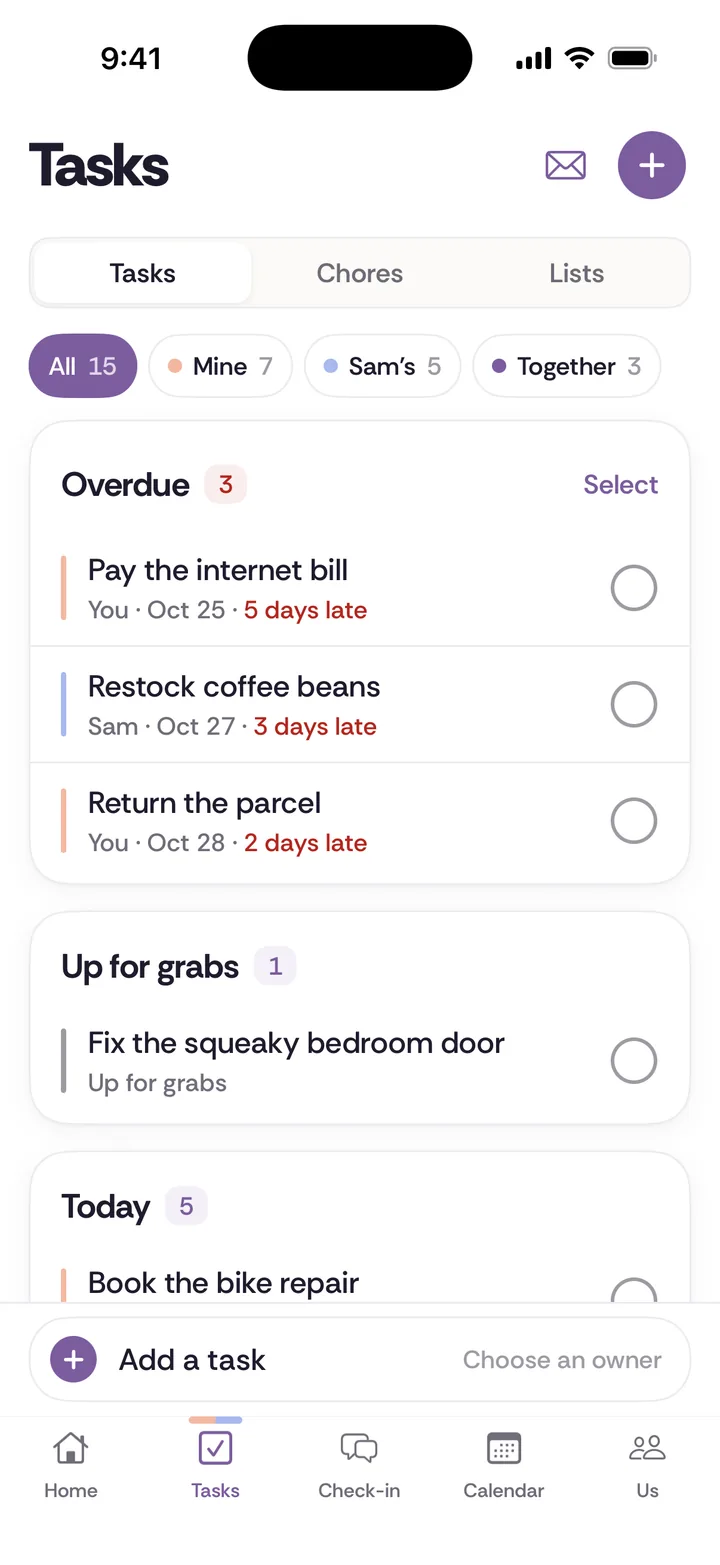
If you need the first version of this list, use the chore split worksheet or a shared note. It costs nothing and works if you both look at it. If you want the schedule to come to you, Tiptoe is a free app for iPhone and the web where chores repeat on a schedule and each one has an owner. You can nudge your partner about an overdue item, so nobody has to bring it up in the kitchen.